







- Elephant Marsh is one of Malawi’s most important fishing grounds, directly employing more than 4,000 people, with thousands more involved in processing and selling fish.
- But the marsh is under multiple pressures, including expanding settlements and farming, and deforestation, which is causing the wetland to shrink.
- The government of Malawi has established and empowered community groups to take on responsibility for conserving the wetland to sustain their livelihoods.
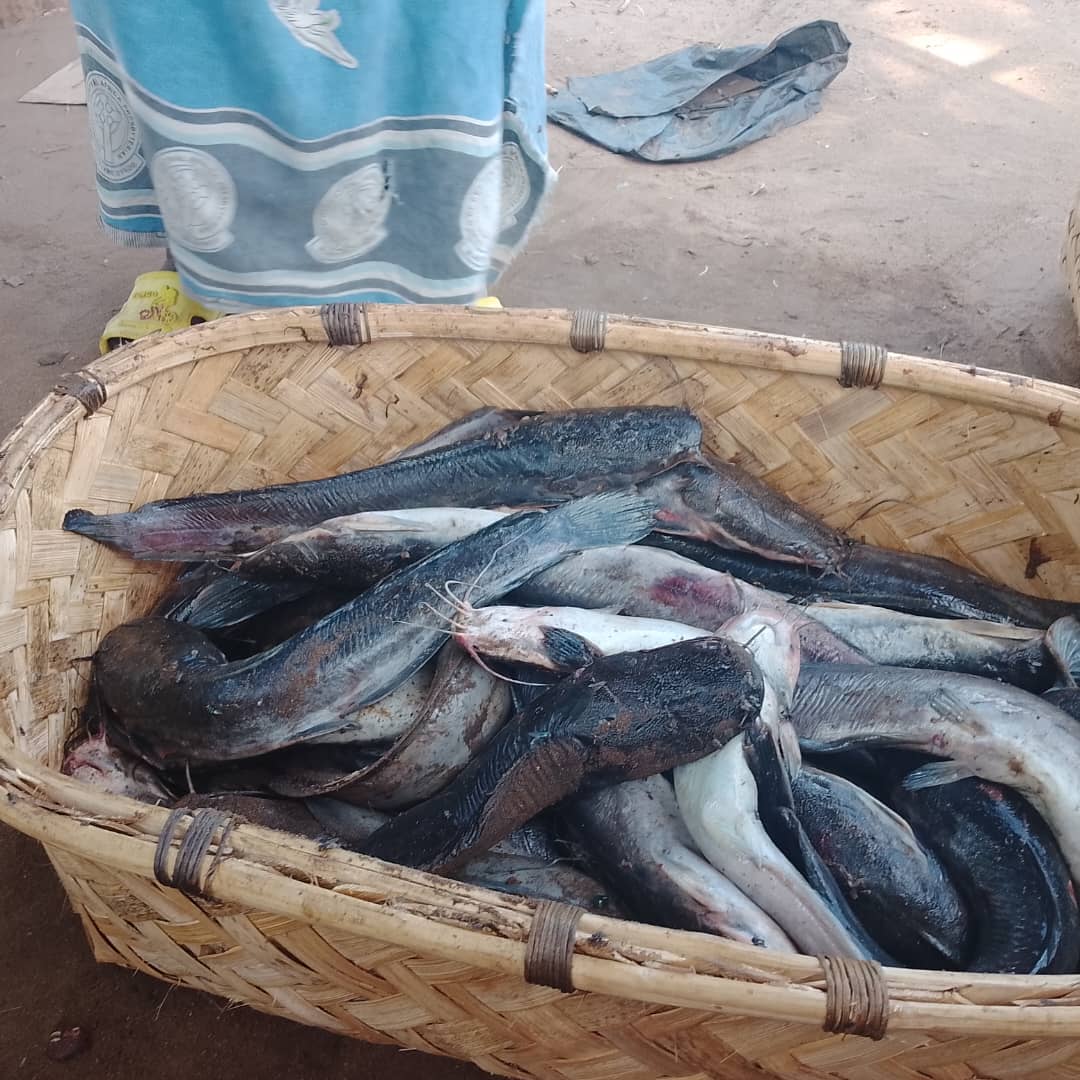
ELEPHANT MARSH, Malawi — At 5:30 am, trader Flora Kumilai is squatting before a heap of smoked catfish at Sorjin Market in southern Malawi’s Elephant Marsh, haggling with sellers over the price. “I found gold in fish,” she chuckles as she fills a third cardboard box. “And Elephant Marsh is the mine.”
Kumilai, who has traveled here from Malawi’s commercial capital, Blantyre, will spend a week in the area, visiting other fish markets around the marsh until she has 12 of these boxes, around 900 kilograms (1,990 pounds) of smoked fish. Then she will band together with other traders to hire a truck to transport their goods back to Blantyre, 140 kilometers (87 miles) to the north. But for Kumilai, the final destination for her goods is more than 1,500 km (930 mi) away, at a market in Kasumbalesa on the border between Zambia and the Democratic Republic of Congo.
She’s been in business for more than a decade now, mostly trading in produce within Malawi and sometimes importing clothes from Tanzania and South Africa for customers in the city. In October 2024, she changed course, when fellow traders introduced her to the cross-border trade in fish.
In Kasumbalesa, most of Kumilai’s customers are from the DRC, she tells Mongabay in Chichewa. “They pay in [U.S.] dollars. When we change it on the black market to Malawi kwacha, it gives us a lot of money. That’s how I’m able to pay for my son’s education [at Chandigarh University in India].”
Elephant Marsh
The fish arrives at Sorjin and six other markets dotted around Elephant Marsh in small basins balanced on the heads of women. Two species make up the bulk of the catch: African catfish (Clarias gariepinus) and Mozambican tilapia (Oreochromis mossambicus).
The marsh stretches over nearly 62,000 hectares (153,000 acres) in the floodplains of the lower Shire River, Malawi’s largest, and boasts a rich diversity of swamp vegetation, bird, reptile, amphibian, fish and large mammal species such as hippos. It was declared a Ramsar Site in 2017, and provides habitat for aquatic species not found anywhere else in the country, including the ray-finned Malawi sanjika (Opsaridium microcephalum), the African mottled eel (Anguilla bengalensis labiate), and the Mozambican tilapia.
Its fishery, 2,100 metric tons per year caught by around 4,500 fishers, according to the national department of fisheries, is the third most important in the country, after Lake Malawi and Lake Chilwa.
Mavuto Labu, vice chair of the Elephant Marsh Association, an umbrella body of community groups involved in the management of the wetland, says that in addition to the fishing grounds, the fertile, well-irrigated land of the marsh provides residents with a vital refuge from the ravaging high temperatures and erratic rains that characterize other parts of the Shire Valley, allowing for the cultivation of various crops almost throughout the year.
But fishing is the keystone of locals’ livelihoods, he says. “It employs thousands as fishers and thousands more in fishing-related activities from the landing sites all the way to our local markets where the major item of trade is fish.”
Like elsewhere in Malawi, men dominate the actual fishing, mostly setting gill nets, but women control every other aspect of the trade — from smoking or drying the catch, taking it to the local markets to sell, to the buying and selling of fishing equipment.
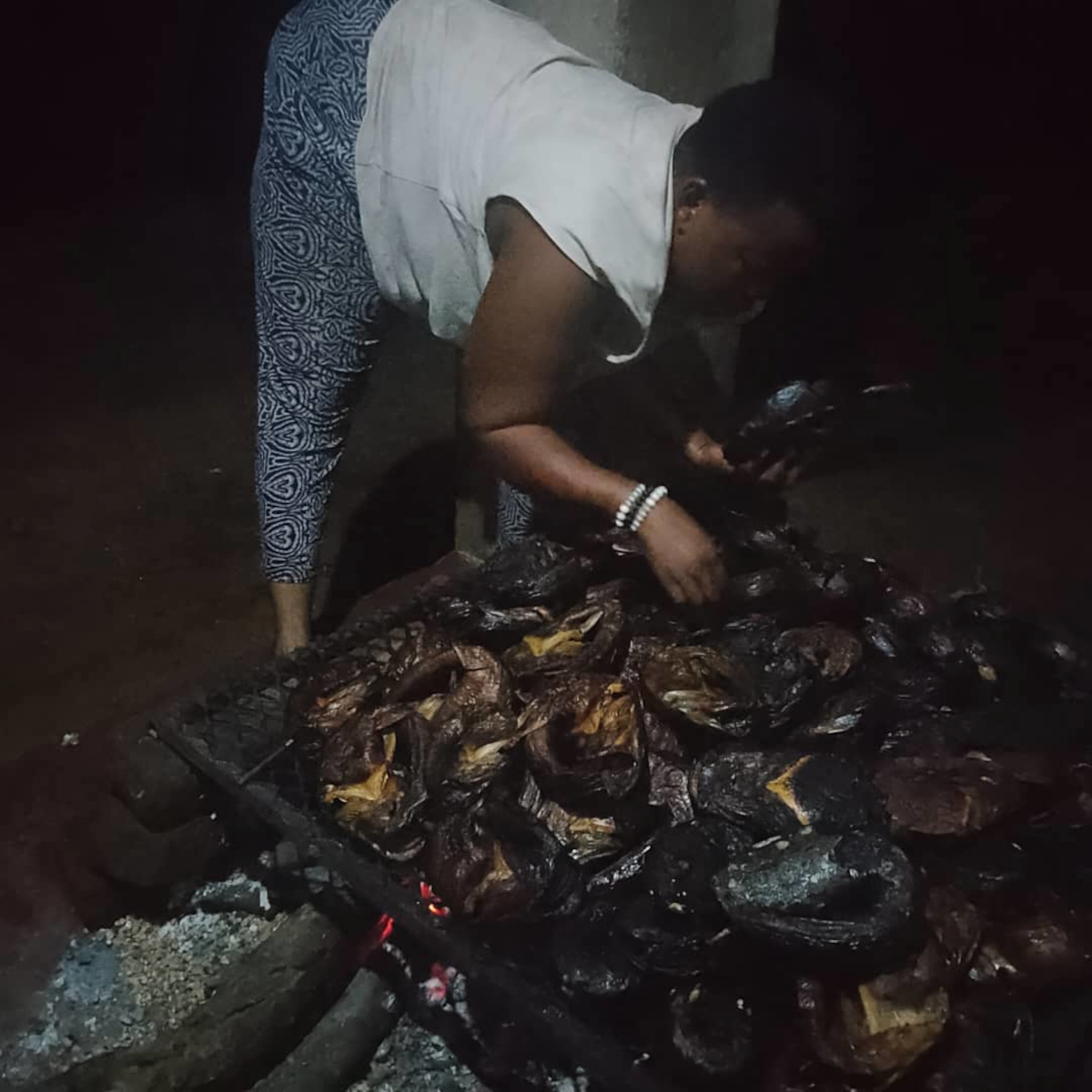
Near one landing site in the east bank of the marsh, Emma Dzangaya comes out of her kitchen, her eyes red and tearing up with smoke. Inside, half-dry wood is smoldering in a kiln above which she has laid catfish on a wire mesh.
Dzangaya and her younger brother — stubbornly not interested in becoming a fisher like his father — earn anywhere between $200 and $500 a month smoking fish for traders. She learned the trade from her father.
“Every time he returned from fishing, he would ask me and my brother to process the fish while he went back to maintain his fish nets and canoes and get ready for another fishing errand. Then my mother would take the fish to the market,” Dzangaya, 42, tells Mongabay.
“Some fishers are too busy to process their fish so that they can sell it at higher price. Many traders coming from Blantyre can’t handle fish smoking; so we do it for them.
“It’s hard work. Sometimes, it gets you coughing for days but this is what helps us manage our home and look after our mother who can’t go out now because of age,” she says.
Forest loss
In the absence of refrigeration, fish from the marsh is either sun-dried or, mostly, smoked on basic firewood and charcoal-burning kilns. However, this is contributing to destruction of forests around the marsh, according to Labu.
“Deforestation is already an issue in our area due to many factors,” says the association vice chair. “But we don’t have alternative ways to preserve the fish. Without support for improved preservation methods, we have a big challenge.”
In recent years, he says, several fishing sites have dried up, filled up by rising levels of sediment in the Shire River.
The changes noted by Labu have been documented by Rodgers Makwinja, an environmental researcher at the University of Johannesburg in South Africa, who used satellite images to examine land-use changes in Elephant Marsh over the past 30 years.
In a phone interview with Mongabay, Makwinja says growing population, unplanned settlements, mining and increased farming in areas surrounding the marsh are causing soil erosion, leading to the shrinking of the wetland.
“People are expanding cultivation area because they have to eat,” he tells Mongabay. “They are cutting down trees for charcoal and firewood to supply to fishers and homes because they want to generate money to sustain their lives. Even though they know the negative impacts of deforestation or extensive farming on the wetland, they don’t have alternative means.”
Protecting the wetland
Malawi’s Department of National Parks and Wildlife (DNPW) has created six “community conservation areas” (CCA) in biodiversity hotspots around the marsh. Each CCA brings fishers, traditional leaders, businesspeople, tour guides and community development committee leaders together to conduct public awareness campaigns about harmful activities, set bylaws to regulate use of the marsh, and carry out patrols to monitor compliance.
Rachael Molotali, vice chair of one of the CCAs, says until recently, communities did not see a role for themselves in protecting Elephant Marsh.
“All we knew is extracting the resources and in an uncontrolled way. Now we have learnt that this wetland is ours and for our benefit. We understand how things in nature work and we realize that if this wetland gets destroyed, our livelihoods will also be destroyed,” Molotali says.
She’s among the thousands of women who drive the fishing industry between fishers at the marsh and the markets, processing fish caught by her husband.
“Before we learnt these [wetland management] issues, he was using illegal fish nets such as mosquito nets. He stopped, and fishers are bringing home bigger fish that is fetching more money than the small ones they used to catch.”
Wisely Kawaye, who manages the Shire Valley division for the Department of National Parks and Wildlife, says the government’s management plan is taking local people’s economic survival into account.
“It’s a process,” Kawaye says. “It takes time for some people to appreciate management measures such as a ban on mosquito nets for fishing, or cultivation too close to the water course, because they see them as threatening their livelihoods. But we are making progress.”
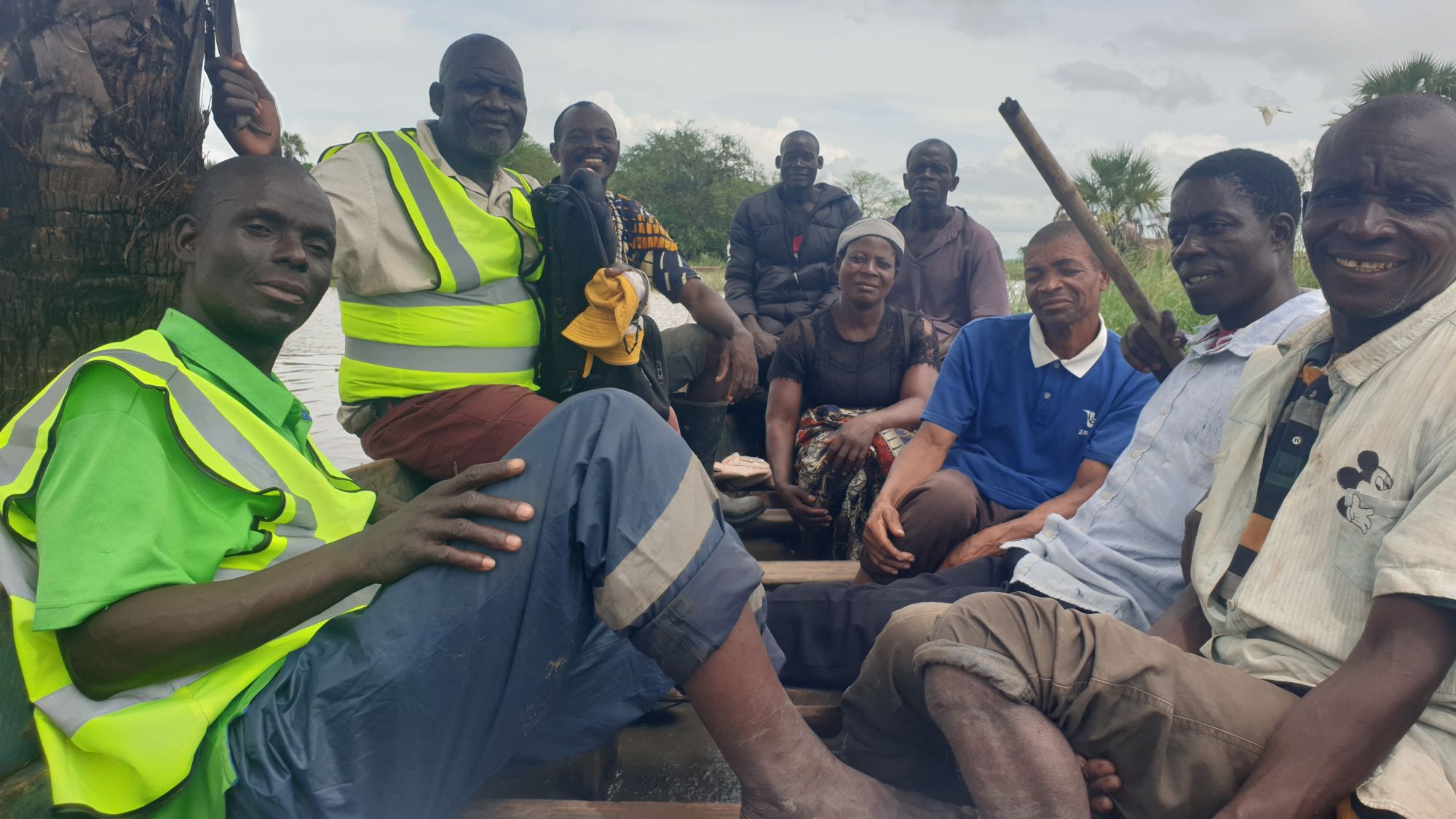
Banner image: Some of the more than 4,000 fishers who make their living in the waterways of Elephant Marsh. Image by Charles Mpaka for Mongabay.
Citation:
Makwinja, R., Curtis, C. J., & Tesfamichael, S. G. (2024). Vulnerability of ecosystem services and functions of Elephant Marsh, Malawi, to land use and land cover change. Wetlands, 44(7). doi:10.1007/s13157-024-01860-1
Local divers pick away at Lake Malawi’s underwater garbage problem
Community-led system boosts fisheries in a corner of fast-depleting Lake Malawi
Feedback: Use this form to send a message to the author of this post. If you want to post a public comment, you can do that at the bottom of the page.
Credits

This story first appeared on Mongabay
This article is licensed under a Creative Commons Attribution-NoDerivatives 4.0 International License.
You may republish this article, so long as you credit the authors and Mongabay, and do not change the text. Please include a link back to the original article.



