
- In 2024, a group of researchers with the U.S. Centers for Disease Control (CDC) used machine learning to analyze 24 Ebola outbreaks between 2001 and 2022 to isolate which geographic and other variables they shared in common.
- They found that forest loss and fragmentation are among the most important predictive factors for where Ebola outbreaks occur.
- Carson Telford, who led the research, told Mongabay modeling like this can strengthen communication and readiness for outbreaks like the one taking place in the eastern Democratic Republic of Congo and Uganda.
The 2026 Bundibugyo Ebola outbreak in Central and East Africa has already left at least 49 people dead, with health authorities racing to stop the spread of the disease.
What if they could have known ahead of time where it would begin?
That’s the question behind a study published last year by Carson Telford and a group of researchers with the U.S. Centers for Disease Control (CDC). They wanted to know whether it would be possible to predict where Ebola outbreaks might start by looking at the characteristics of areas where the virus had already “spilled over” from an animal host into a human. Telford and his colleagues analyzed 24 outbreaks between 2001 and 2022, using variables like population density and forest cover to train their model.
When they ran the analysis of where those outbreaks occurred, they found a high correlation with forest loss and fragmentation.
The model they built with that data was strikingly accurate. It put a town in the Democratic Republic of Congo in its top 0.1% of risk areas — just a few months before an outbreak happened there in 2022. Another that followed in Uganda was in a district it had identified as being in the top 6% for that country.
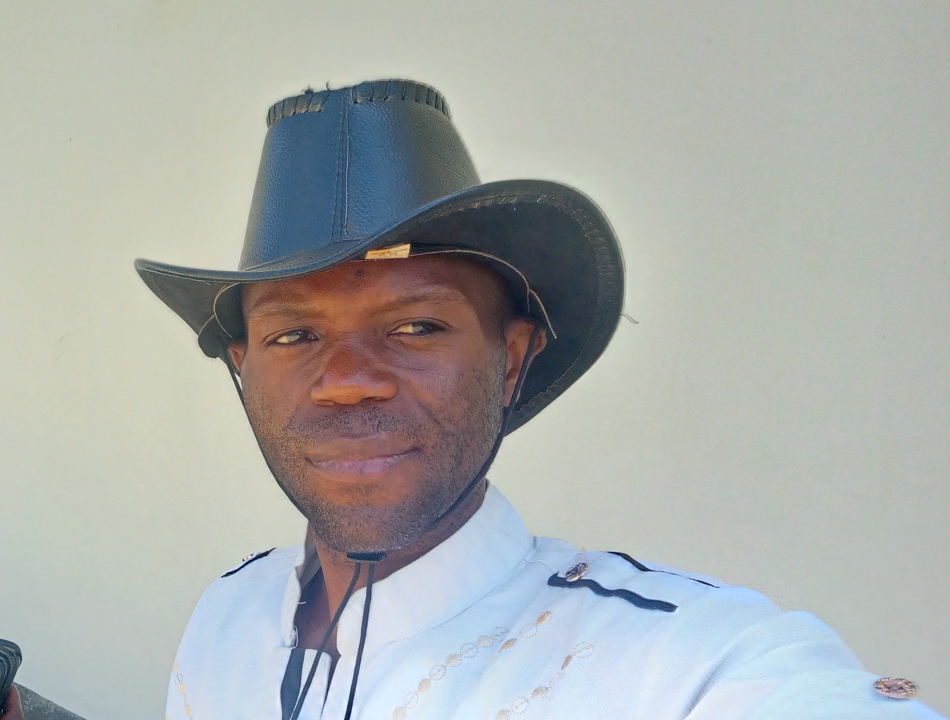
Mongabay’s Ashoka Mukpo spoke to Telford about the link between Ebola and deforestation, and how understanding it could help stop outbreaks early on.
Mongabay: How would someone go about estimating the odds of an Ebola outbreak happening somewhere?
Carson Telford: We used a machine-learning algorithm that incorporated all possible climatological and land-cover variables that we thought were reasonable based on the known ecology of Ebola.
The nice thing about a machine-learning algorithm is that the goal is prediction. We don’t really care why the model is accurate or which specific variables are driving it. The question is: does it predict well or not?
These algorithms can handle a large number of variables and learn from the data to differentiate between places where spillover did and did not occur.
With this model, I quantified variables across multiple spatial scales. Using deforestation as an example, I looked at forest change within 10 kilometers, 25 kilometers, 50 kilometers, and 100 kilometers [6, 15, 30 and 60 miles] of a prediction location. That allows us to account for local changes and broader landscape changes and let the machine-learning model determine what matters most for spillover.
Mongabay: What’s the value of having this kind of predictive data?
Carson Telford: The main value is not to say exactly when and where an outbreak is going to happen. That’s impossible.
The value is highlighting regions that could be targeted for increased communication with high-risk groups. That could be people who rely on bushmeat as a source of protein, hunters, or others with frequent wildlife contact.
Physicians are probably the best example. You can tell them, “For your awareness, this is a high-risk area, and compared to last year there were environmental conditions consistent with increased spillover risk.”
That’s really the value: communication and early detection. Trying to catch it as fast as possible when it does happen.
Mongabay: What did your model say were the characteristics of a place that would be considered high risk?
Carson Telford: By accounting for all of these different spatial scales, we found that population density was an important factor. In particular, remote areas with relatively few people tended to have increased risk of Ebola outbreaks.
Another important predictor was local-scale forest change. When we looked at the 10 kilometers around spillover locations, the odds of an outbreak were higher as recorded forest loss increased.
The nuance is that we can’t necessarily say that’s a causal effect. It’s possible forest loss is correlated with something else that wasn’t measured. I suspect forest loss is affecting the behavior of the reservoir species, but this wasn’t a formal causal analysis.
It’s a predictive model using all available information.
Mongabay: So, when you looked at prior outbreaks, what you found is that the top predictors were low population density and a high rate of deforestation?
Carson Telford: Forest change, forest loss, and human population density were all very important predictors.
Mongabay: Did the model then prove effective in predicting any outbreaks after it was developed?
Carson Telford: We trained the model on all available data up to the most recent year, then looked at where the highest overall odds of an outbreak were and where the largest increases in outbreak risk had occurred.
Two outbreaks happened the following year. One was in the Democratic Republic of Congo, and it occurred in the single location with the highest predicted outbreak risk from the previous year. That location was in roughly the top 0.1% of predicted risk.
Theoretically, if we had taken those model results and gone to the highest-risk locations and notified physicians that these were the highest-risk areas in Equatorial Africa, we would have gotten that one right.
The other outbreak was in Uganda. It wasn’t among the highest-risk locations overall, but when we looked at the year-to-year increase in risk, it fell within the top 1%.
That’s why it’s important to look both at overall risk and at environmental changes that may be shifting risk. Using those two approaches together, we correctly identified both outbreaks. I recognize that’s a small sample size and somewhat anecdotal, but it was encouraging.
Mongabay: And both of those outbreaks happened in areas that had seen some level of forest loss in the prior year?
Carson Telford: There were other variables as well. One of the important predictors was overall forest density or forest cover. The DRC outbreak occurred in an area with high forest cover, but also highly fragmented forest.

Human settlements extended right up to the forest edge. That edge zone — the interface between human land use and forest habitat — was a major predictor. It represents places where humans are more likely to come into contact with wildlife.
Mongabay: It sounds like deforestation isn’t the only predictor of where an Ebola outbreak is going to take place, but it is one of them. Do you have any thoughts on why that would be the case?
Carson Telford: I do, although they’re really just hypotheses.
There have been some great studies by Raina Plowright on fruit bats in Australia that showed increased viral shedding when bats are under immunological stress. My hypothesis is that there are a couple of possible drivers.
Assuming bats are the reservoir species — which we still don’t know for certain — altering their habitat may be causing stress because their food sources are changing. They may be relying more on anthropogenic food sources, which was observed in Australia. If that’s the case, and they’re increasingly using resources around human settlements, then they’re also coming into closer contact with people. Fruit farming, for example, could attract bats and increase opportunities for transmission.
Another possibility is that habitat disturbance forces animals to move. If bats aren’t staying around human settlements but are instead being displaced into new areas, they’re still dealing with an unfamiliar environment, which could also create stress and increase viral shedding.
That shedding could then spill over into non-human primates and eventually into humans. We’ve seen outbreak investigations where the index case was a hunter who became infected while butchering bushmeat and coming into contact with the blood of an infected primate.
So there are a lot of possible pathways, and they’re all interconnected. But the main takeaway is that environmental change may increase contact between humans and the reservoir species, whatever that reservoir ultimately turns out to be.
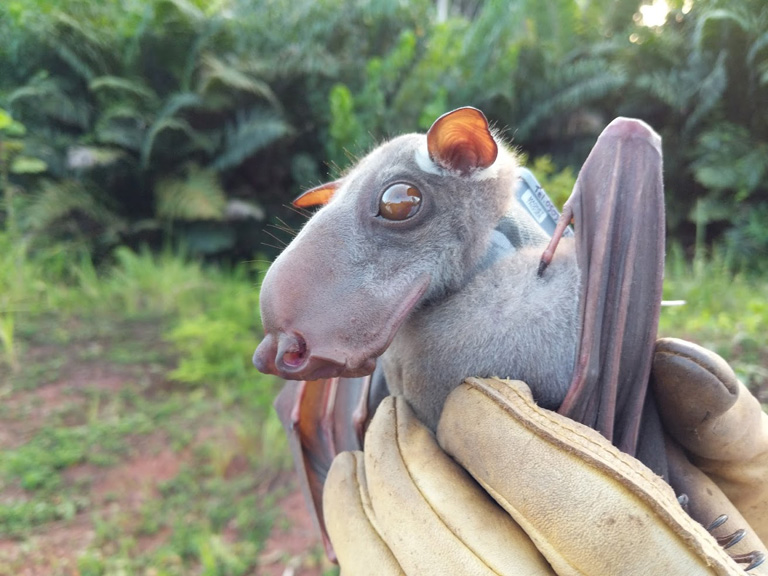
Banner image: Hammer-headed fruit bats (Hypsignathus monstrosus) like this are considered a likely reservoir host for the Ebola virus. Image by Sarah Olson for Mongabay.
Citations:
Telford, C. T., Amman, B. R., Towner, J. S., Montgomery, J. M., Lessler, J., & Shoemaker, T. (2025). Predictive model for estimating annual Ebolavirus spillover potential. Emerging Infectious Diseases, 31(4), 689-698. doi:10.3201/eid3104.241193
Eby, P., Peel, A. J., Hoegh, A., Madden, W., Giles, J. R., Hudson, P. J., & Plowright, R. K. (2022). Pathogen spillover driven by rapid changes in bat ecology. Nature, 613(7943), 340-344. doi:10.1038/s41586-022-05506-2
Ebola outbreak draws attention to longstanding virus spillover risks in western Uganda
At least 65 dead in latest Ebola outbreak in eastern DR Congo
FEEDBACK: Use this form to send a message to the author of this post. If you want to post a public comment, you can do that at the bottom of the page.
Credits

This story first appeared on Mongabay
This article is licensed under a Creative Commons Attribution-NoDerivatives 4.0 International License.
You may republish this article, so long as you credit the authors and Mongabay, and do not change the text. Please include a link back to the original article.