



South Africa’s political landscape has entered a period of intensified turbulence, with developments spanning the ANC Women’s League, the South African Communist Party’s Conference of the Left, and the ongoing Madlanga Commission investigations raising critical questions about accountability, ideological alignment, and electoral prospects.
Independent political analyst Rebone Tau provided analysis on the implications of these shifting dynamics.
ANC Women’s League Under Scrutiny
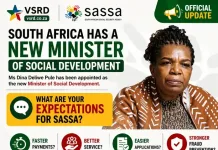
The ANC Women’s League faces a potential leadership crisis following the dismissal of Social Development Minister Sisi Tolashe and recommendations that she step aside from party leadership positions. According to Tau, the ANC’s decision to refer Tolashe to its disciplinary committee based on integrity committee recommendations marks a notable shift, as such recommendations have historically not been binding.
“Let’s start maybe with the ANC… for the first time that we see the ANC actually stepping up around the recommendations made by the integrity committee,” Tau noted.
However, Tau criticized the Women’s League for its silence regarding allegations that a vulnerable female employee had approximately half her salary extorted, allegedly by Tolashe or her daughter. “This is a woman who is part of a constituency that the women’s league represents which is the poor, black and someone from the village,” Tau said. “Up to today, I’ve not heard the women’s league say anything.”
Tau questioned whether the ANC’s approach reflects consistency in handling leaders facing ethical allegations, noting that political heavyweights have historically been treated differently. While Tolashe retains support as Women’s League president—a position representing a significant delegate bloc at ANC conferences—Tau suggested the League’s delayed response indicated her continued influence within the structure.
Conference of the Left: Ideological Divide or Political Strategy?
The South African Communist Party convened its much-anticipated Conference of the Left, bringing together organizations including the EFF, MK Party, labor formations, and civil society groups. The ANC has chosen to stay away, asserting there is “nothing genuinely leftist” about the gathering.
Tau questioned the timing and composition of the conference. “It seems like it’s an anti-grouping of former members… besides the SACP but you look at MKP, you look at ACT led by Ace Magashule, you look at the EFF—all of them their leaders were all expelled by the ANC,” Tau observed.
Tau also noted that former Cosatu general secretary Zwelinzima Vavi announced that SAFTU would not participate, raising questions about ideological coherence. “Is it because they went into a government of national unity with the DA and Freedom Front Plus and others that are not seen ideologically to be in terms of pushing left politics?” Tau asked, adding that many participating leaders were in government during periods of widespread corruption.
SACP-ANC Alliance: “Divorce Papers” Being Signed?
When asked whether the split between the SACP and ANC is now formalized, Tau responded affirmatively. “I think so… The SACP has played a very destructive role in the ANC. If you look at all the conferences of the ANC… today they want to stand as if they were not part and parcel of destruction within the ANC.”
Tau traced cracks in the alliance to 2017, when the SACP contested internal ANC elections, and suggested the time has come for the alliance partners to contest elections separately.
Regarding electoral threat, Tau pointed to recent by-election results where the SACP secured approximately 30% of the vote in one contest. “That 30% represents—we don’t know if it could have gone to the ANC or it could have gone to another party,” Tau said, warning that council candidates who fail to secure nominations may defect to the SACP, further eroding the ANC’s base alongside pressures from the MK Party and EFF.
Madlanga Commission: Accountability Expectations
President Cyril Ramaphosa is expected to receive the second interim report from the Madlanga Commission. Tau highlighted a key distinction from the Zondo Commission: the Madlanga report is classified, limiting public scrutiny.
“What South Africans are wanting to see is that will politicians be held accountable,” Tau stated, noting that previously released names primarily implicated government officials rather than political leaders. Tau referenced allegations involving figures like Vusimuzi “Cat” Matlala and questioned why no action has followed.
Tau also emphasized the importance of transparency regarding suspended minister Senzo Mchunu. “It will be very interesting to really also know what the Madlanga Commission said,” Tau said, cautioning that limited public disclosure could undermine public trust.
On the political calculus of releasing damaging findings, Tau argued that transparency could ultimately benefit the ANC’s renewal message. “If he wants to preach that message of renewal, he should make those findings public… then it’s about saying we are in the renewal process and people will be seeing action.”
KwaZulu-Natal Coalition Dynamics
In KwaZulu-Natal, the NFP terminated the membership of Mbali Shinga as its representative in the provincial government. Tau described the development as significant but not decisive, given the coalition’s narrow mathematics.
The governing coalition of the DA, IFP, and ANC holds a 41-seat majority in the 80-seat legislature. Tau explained that attempts by the MK Party and NFP to table a vote of no confidence in the premier would result in a 40-40 tie, insufficient for removal. “They still need one vote,” Tau said, noting that neither the DA, IFP, nor ANC is likely to provide it.
Tau dismissed speculation about imminent coalition collapse in the province, citing the MK Party’s internal instability—including frequent leadership changes and member resignations—as a deterrent to potential coalition partners.
MK Party Faces Extortion Allegations
The MK Party’s chief whip is facing court allegations of extorting money from party employees, with claims that funds were solicited to support Jacob Zuma’s legal fees. Tau described the allegations as politically damaging, particularly given parallels to the Tolashe case.
“It does then say that it’s a bit worrying that there’s a new pattern of politicians extorting workers,” Tau observed. “When it’s been done by women who you would think that they could be more sympathetic… it’s them who are extorting workers.”
Tau commended the MK Party for swiftly issuing a statement and taking action, contrasting this with the Women’s League’s initial silence. However, Tau emphasized that substantiation is critical: “She has to put evidence on the table to show the transactions of the money. If the money indeed went to Zuma… then the question would be how many other MKP members found themselves in that situation.”
Voter Considerations Ahead of Local Elections
With local government elections approaching, Tau reflected on how voters should weigh individual misconduct against party accountability. Referencing cases across parties—including allegations involving DA leader John Steenhuisen—Tau noted a pattern: “It seems like all these political parties are always found compromised.”
Tau emphasized that local elections center on service delivery and candidate credibility. “At least with local government what is nice is people that we know that we live within our communities,” Tau said, suggesting that voter familiarity with ward-level candidates could influence outcomes.
Tau highlighted Johannesburg as a particularly consequential contest, with prominent figures including Helen Zille, Herman Mashaba, and Mpho Phalatse potentially competing. “It will be very interesting to see who is also going to field in this election,” Tau concluded, noting that the city’s CBD challenges remain a central issue.
As political fault lines deepen, Tau’s analysis underscores a landscape defined by accountability tests, ideological realignments, and electoral uncertainty—with South African voters increasingly tasked with navigating complex questions of ethics, representation, and renewal.