







- At the Philanthropy Asia Summit’s “Sea Change” panel on ocean-climate solutions in Asia, speakers highlighted a mismatch between the ocean’s importance to the climate transition and the tiny share of philanthropic funding directed to ocean-climate work.
- Ocean philanthropy has long focused on conservation, fisheries, and coastal livelihoods, but climate change is now threatening many of those gains while also making the ocean central to mitigation through offshore wind, cleaner shipping, blue carbon, and coastal resilience.
- Philanthropy cannot finance offshore wind farms or the decarbonization of global shipping, but it can play a catalytic role by funding policy design, marine spatial planning, community engagement, technical research, coordination, and local capacity.
- Some of the strongest opportunities for funders lie in Asia, where offshore wind, ports, shipbuilding, shipping routes, and coastal communities converge, and where early philanthropic support can help make large-scale transitions faster, more inclusive, and more credible.
Ocean philanthropy remains a small field. Funding directed specifically toward ocean-climate solutions is smaller still.
At last week’s “Sea Change” panel on ocean-climate solutions in Asia, convened as part of the Philanthropy Asia Summit, the discussion kept returning to this mismatch: the ocean is central to the climate transition, yet ocean-climate philanthropy remains a rounding error in global giving.
Ocean-climate philanthropy’s funding gap
The numbers are stark: Less than 1.5% of global philanthropic giving goes to climate mitigation. About 0.25% goes to ocean issues. At the intersection of the two, the figure is roughly 0.05%. That is a narrow base of support for work that touches power generation, shipping, food systems, coastal protection, marine biodiversity, and the future of many island and coastal economies.
The ocean has long been treated by funders primarily as a conservation concern. Grants have supported marine protected areas, fisheries management, coastal livelihoods, scientific research, and habitat protection. Much of that work remains essential. It has helped create institutions, protect places, and improve the management of fisheries and reefs. Climate change is now the force most likely to overwhelm many of those gains. Warming, acidification, rising seas, stronger storms, and shifting fish stocks are changing the conditions under which ocean conservation operates.
The ocean has absorbed around 30% of human carbon dioxide emissions and more than 90% of excess heat. That buffering role has reduced the scale of warming experienced on land while placing growing stress on marine systems. The ocean is also becoming a larger part of climate mitigation and adaptation planning. Offshore wind, shipping decarbonization, blue carbon, marine carbon dioxide removal, and coastal resilience increasingly feature in climate strategies. According to the High Level Panel for a Sustainable Ocean Economy, ocean-based climate solutions could provide up to half of the emissions reductions needed by mid-century on a 2°C pathway.
Philanthropic priorities have shifted more slowly. As Al Harris of the Ocean Resilience and Climate Alliance (ORCA) noted during the panel, ocean philanthropy and climate philanthropy have often developed as separate cultures. Ocean funders have tended to focus on conservation. Climate funders have often looked past the sea, focusing instead on power grids, land transport, buildings, forests, and industry. The result is a gap between the scale of the opportunity and the resources available to develop it.
Why Asia matters
Asia sits at the center of that opportunity. The region holds about 60% of the world’s population, a large share of global exclusive economic zones, much of the world’s coral and mangrove biodiversity, more than half of wild fish landings, and most aquaculture production. It is also central to ocean-based mitigation. Asia accounts for a large share of offshore wind capacity, a major portion of shipping emissions, and much of the world’s port, shipbuilding, and maritime manufacturing capacity. The technologies, regulations, supply chains, and political bargains that determine the next phase of ocean-climate action will often be developed there.
Yet only a small share of global ocean philanthropy flows to Asia. A recent estimate from CEA Consulting put the figure at roughly 7%, or about $60 million to $65 million annually. Funding is concentrated among a few large donors, much of it based outside the region. It is also distributed unevenly, with some countries receiving far more attention than others. Within that limited pool, much of the money has historically gone to conservation and fisheries rather than mitigation sectors such as offshore wind and shipping.
What small grants can do
Philanthropy cannot build the offshore wind industry. It cannot finance the decarbonization of global shipping. These are sectors measured in gigawatts, shipyards, ports, grid connections, fuel infrastructure, and investment cycles that run for decades. Most capital will come from governments, utilities, developers, shipowners, fuel producers, ports, banks, and industrial companies.
That scale does not make philanthropy irrelevant. It makes its role more specific. Grants are often most useful in areas that commercial capital and government budgets rarely support. They can fund early-stage analysis, independent policy advice, community engagement, regulatory design, convening, local technical capacity, and civil-society participation. They can help determine whether large investments move quickly, whether they move responsibly, and whether public trust survives the transition.

Offshore wind
Offshore wind illustrates the point. Across much of Asia, the resource is large and the need for clean power is rising. Energy security has strengthened the case. Many countries remain heavily exposed to imported fossil fuels, volatile prices, and geopolitical disruption. For governments seeking domestic, utility-scale renewable power, offshore wind has become increasingly attractive.
Jamie Choi of Tara Climate Foundation framed the opportunity in these terms: offshore wind is not merely a technology question, but a systems question. A wind farm at sea requires clear leasing rules, environmental standards, grid planning, port upgrades, supply chains, vessels, finance, and a credible path to permitting. In many markets, those pieces are incomplete. Developers may be interested, while ministries, regulators, local governments, utilities, fishing communities, and conservation groups lack a shared process for deciding where projects should go and how benefits and risks should be managed.
This is where philanthropy can contribute. It can fund technical work on marine spatial planning. It can support research on migratory birds, fisheries, marine mammals, benthic habitats, typhoon exposure, grid integration, and port readiness. It can help governments develop environmental impact assessment standards suited to tropical waters rather than copied from the North Sea. It can pay for independent analysis that allows public agencies to make better decisions before commercial pressure becomes too strong.
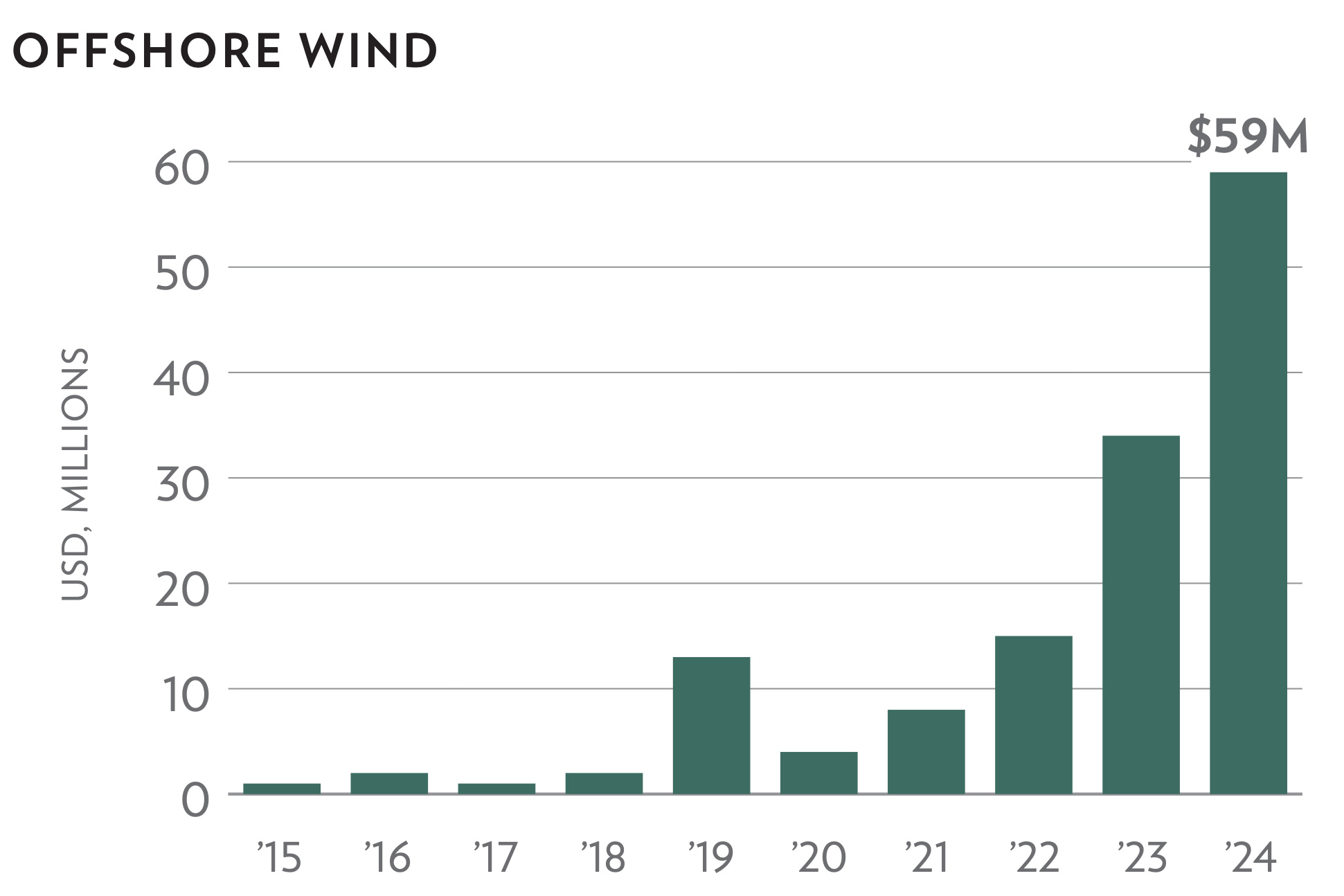
Conditions in Asia differ substantially from those in the North Sea, where much of the industry’s early development occurred. In Southeast Asia, developers face deeper water in many places, intense coastal use, typhoons, high marine biodiversity, and millions of people dependent on small-scale fisheries. Rizaller “Jun” Amolo of Ocean Energy Pathway described the Philippines as a test case for tropical offshore wind: a country with substantial wind potential, a growing project pipeline, rich marine biodiversity, migratory bird routes, and millions of fishers whose livelihoods depend on coastal waters.
Responsible development in such places requires more than avoiding the worst impacts. It requires planning with fishers and coastal communities before decisions harden. It means mapping fishing grounds, sea lanes, cultural sites, biodiversity values, and existing conflicts. It means asking how project revenues might benefit host communities, how jobs and training can reach local workers, and how small-scale fishers are treated when safety zones, construction activity, or new marine infrastructure change access to the sea.
Offshore wind infrastructure may also create conservation benefits under certain conditions. Amolo pointed to the possibility that turbine areas could, in some cases, function like other effective area-based conservation measures (OECMs). Turbine foundations can function as artificial reef structures in some settings. Safety zones can reduce destructive activities, including bottom trawling, around infrastructure. Some offshore wind areas may, if managed carefully, deliver conservation benefits and favor small fishers over industrial extraction. Such outcomes depend on siting, regulation, monitoring, local consent, and enforcement. Philanthropy can support the work needed to test such claims honestly rather than leaving them as public-relations language.

Decarbonizing shipping
The same logic applies to shipping. The industry carries around 90% of global trade and produces roughly 3% of global emissions. Its transition is difficult because ships are long-lived assets. A vessel ordered today may still be operating in 2050. That creates lock-in risk. If shipowners continue ordering vessels designed around conventional fuels, they may preserve short-term cost advantages while extending emissions for decades.
Global regulation matters because shipping is international. The recent deferral of the IMO’s net-zero framework sharpened the point. Freda Fung of ClimateWorks Foundation emphasized that a credible global framework is needed to give shipowners, fuel producers, ports, and financiers the confidence to invest. When that framework slips, shipowners have stronger incentives to wait or make conventional choices, especially when freight markets are disrupted and energy-security concerns dominate boardroom decisions. Fung described the deferral as a reason to focus harder on work that can proceed now: green shipping corridors, port readiness, fuel infrastructure, and coordination among the companies and regulators that will have to make cleaner shipping real.
Action is nevertheless moving at the level of ports, corridors, shipyards, and fuel supply chains. Asian ports are preparing for green methanol bunkering. Some are studying ammonia safety. Shipbuilders in China, Japan, and South Korea are adapting to demand for new vessel types. Fuel producers are exploring green methanol, green ammonia, and hydrogen-based supply chains. Short-sea shipping, ferries, inland vessels, and some coastal routes may be candidates for electrification sooner than ocean-going bulk carriers.
Coordination is one area where philanthropy can contribute. Fung pointed to green shipping corridors as a practical entry point: routes where ports, shipowners, fuel suppliers, regulators, and cargo owners can begin aligning around zero-emission vessels. A fuel producer needs confidence that ships will buy its product. A shipowner needs confidence that fuel will be available along a route. A port needs to know which infrastructure to build. Regulators need safety standards, workforce training, and emergency protocols. Financiers need reliable performance data. Cargo owners need ways to share costs and claim emissions reductions credibly.
The challenge extends beyond the reach of any single grant. Grants can fund the platforms, studies, and trusted intermediaries that make coordination possible. They can support demand aggregation across sectors that need the same fuels, such as fertilizer, chemicals, and shipping. They can help identify where charging infrastructure for electric vessels would have the greatest effect. They can support analysis of split incentives between shipowners and charterers. They can fund measurement systems that show whether efficiency technologies perform as promised in real operating conditions.
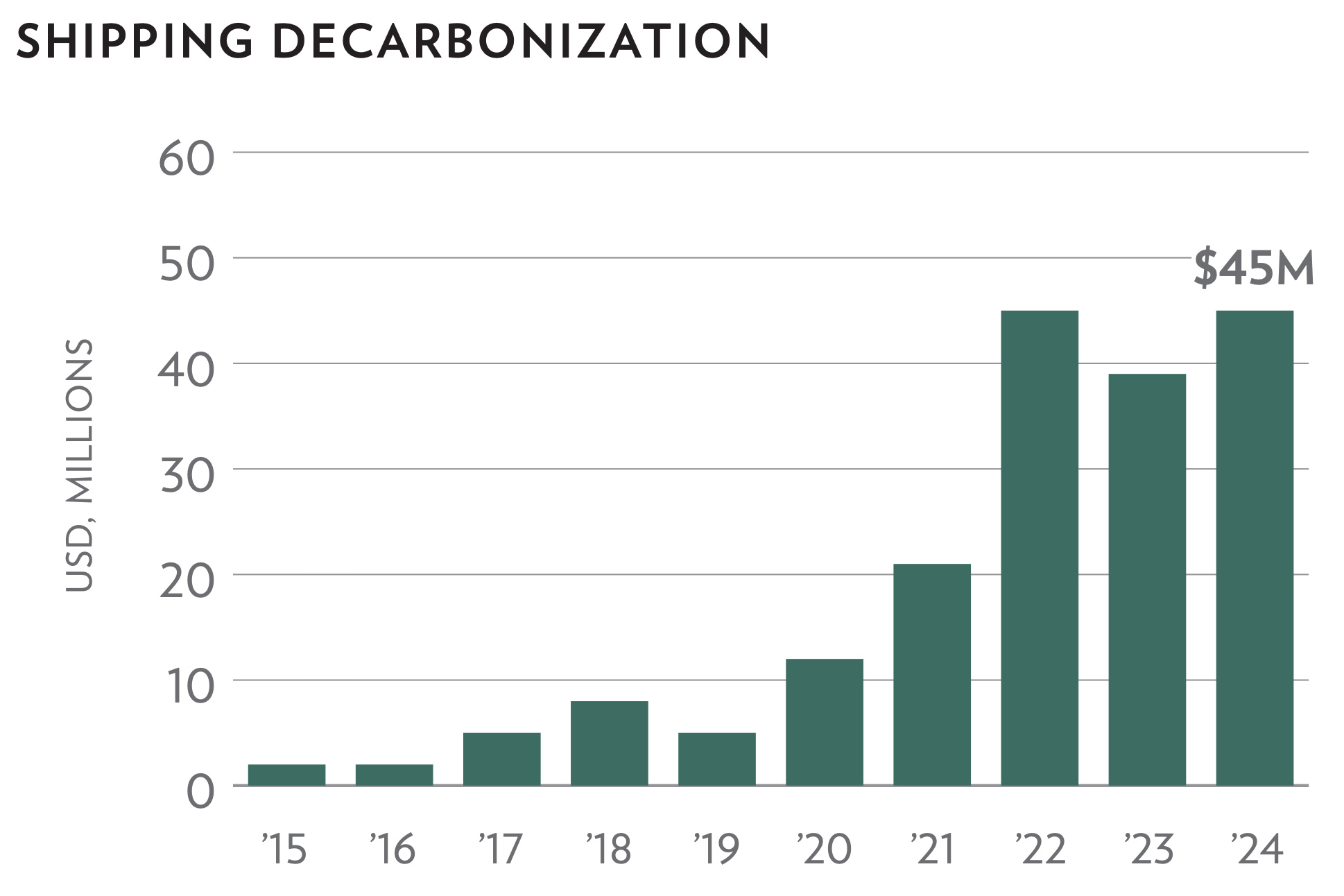
Qiu Peng, speaking from the perspective of a shipping operator, Tsao Pao Chee (TPC), underscored the commercial constraint. The question for shipowners is not whether decarbonization is desirable, but whether new fuels, infrastructure, financing, and regulation line up in time to make investment viable. Much of the work needed to answer that question involves technical and administrative tasks rather than highly visible projects. It may involve drafting standards, convening ministries, supporting local researchers, translating engineering questions into policy choices, or ensuring that port communities have a voice in decisions that affect air quality and land use. These are precisely the kinds of costs that large capital projects often externalize and that public agencies may struggle to cover.
The enabling work
Funders can struggle to distinguish between visible activity and interventions that materially influence decisions. A scattered set of grants can generate workshops, reports, pilots, and announcements without changing the trajectory of a sector. Useful philanthropy starts by identifying which decisions are genuinely constrained by a lack of information, coordination, capacity, or public engagement.
Much of the most useful philanthropic support will be directed toward the enabling environment. Offshore wind and green shipping do not stall only because technology is unavailable. Delays often arise from unclear rules, slow permitting processes, limited technical capacity, weak coordination between agencies, or inadequate community engagement. These are areas where grants can have outsized influence.
The case for local capacity
Local organizations also deserve a larger share of support than they have historically received, said Amolo. Much ocean philanthropy in Asia has flowed through large international organizations. Many have done valuable work, yet the next phase of ocean-climate action will depend heavily on local universities, policy institutes, civil-society organizations, community associations, and technical experts who understand national institutions and local political realities. Several panelists returned to this point in different ways: durable transitions require local capacity, not just imported expertise.
The social dimensions of the transition warrant equal attention. Offshore wind can provide jobs, revenue, and cleaner electricity, yet it can also alter access to fishing grounds and change how coastal communities use marine space. Shipping decarbonization can reduce emissions while creating new infrastructure demands around ports and industrial zones. Communities are more likely to support these transitions when they are involved early enough to influence decisions rather than merely comment on them.

Funders also have an opportunity to bridge sectors that rarely work together. Ocean-climate issues sit between conservation, energy, transport, finance, industry, and community development. Conservation groups may view offshore infrastructure primarily through an ecological lens. Energy planners may focus on generation targets. Maritime stakeholders may prioritize fuels and logistics. Harris argued that this is one of philanthropy’s most important roles: creating spaces where these perspectives can meet before disagreements harden into opposition.
A modest but catalytic role
Donors should also remain realistic about scale, said Choi and Harris. Philanthropic capital will never provide the bulk of funding required for offshore wind or shipping decarbonization. Its comparative advantage lies in flexibility, independence, and a willingness to support work that larger institutions often overlook.
None of this diminishes the importance of traditional ocean conservation. Marine protected areas, fisheries reform, habitat protection, and community-led management remain necessary. These activities now operate within a climate system that is changing rapidly. Protecting the ocean while ignoring the energy and transport systems that are heating it is an incomplete strategy.
A more practical approach, according to the panel, recognizes that offshore wind needs rules, science, community engagement, and local capacity. Shipping needs regulation, infrastructure, credible fuels, and coordinated demand. Coastal communities need opportunities to shape decisions that affect them. Governments need trusted analysis. Industry needs clearer signals. Civil society needs resources to engage with technical questions that will shape the ocean for decades.
Philanthropy is unlikely to determine whether offshore wind expands or shipping decarbonizes. It can help determine how quickly those transitions occur, how inclusive they are, and whether institutions and communities are prepared for them. Relative to the capital required for ports, vessels, grids, and wind farms, philanthropic funding will remain modest. Its influence is greatest when it helps governments, communities, researchers, and industry address problems that larger sources of capital are poorly suited to solve.
Banner image: Aerial view of a cargo ship. Photo by Cameron Venti / Ocean Image Bank
Credits

This story first appeared on Mongabay
This article is licensed under a Creative Commons Attribution-NoDerivatives 4.0 International License.
You may republish this article, so long as you credit the authors and Mongabay, and do not change the text. Please include a link back to the original article.



