



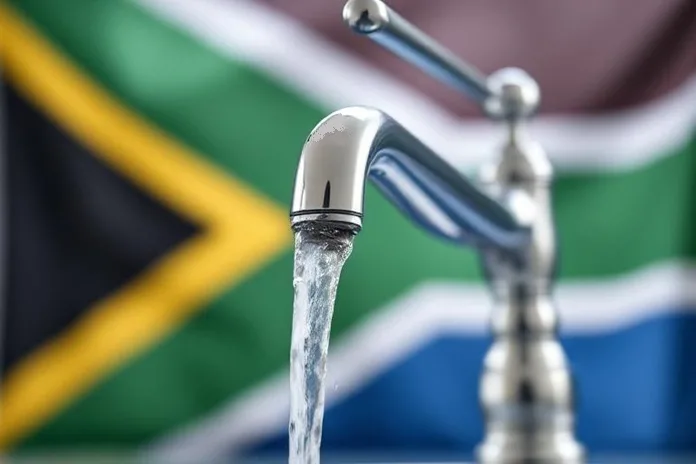
The South African Human Rights Commission (SAHRC) is set to hold a public investigative inquiry this week into the worsening water crisis across Gauteng, following years of complaints about persistent shortages, service delivery failures, and governance breakdowns that the commission says violate residents’ constitutional rights.
The inquiry comes after more than two years of increased complaints from the public regarding prolonged water outages and poor water quality coming out of household taps. The commission will examine the extent and nature of water access challenges, the causes of recurring shortages, and infrastructure failures.
Khululiwe Sithole, acting manager at the SAHRC, said the commission initiated the investigative inquiry after realizing that individual complaints pointed to a greater systemic issue.
“We were dealing with those matters as and when they came to us, but then we realized that this speaks to a greater systemic issue that warrants an investigative inquiry of this scale,” Sithole said.
While the reasons for the crisis—including systemic inefficiencies, lack of skills, lack of funds, and officials failing to do their jobs—may appear obvious to the public, Sithole stressed the importance of a formal investigation. “It is very important for the commission as part of its constitutional mandate to have an investigation that will result in a report that will clearly outline where the issues are, who is not doing their job, and how long this issue has been existing,” she said.
Asked about a recent Constitutional Court ruling regarding the commission’s powers, Sithole clarified that the court affirmed the SAHRC’s existing authority. “What the court said is that the powers that the commission currently has in terms of its legislative act remain the same. We don’t need to have greater powers because our strength lies in exactly what we are able to do through investigative inquiries such as this,” she said. She noted that the judgment emphasized that information gathered by the commission can be used as evidence in court should recommendations not be followed.
The commission has received an overwhelming number of submissions from the public. Municipalities have been approached and, where necessary, subpoenaed to explain why residents lack water and why water quality is substandard.
Sithole acknowledged difficulties in getting responses from government departments, describing the attitude as no different from how some officials treat court orders. “We find that we have to follow up over and over again on the same issues to the point where we have to conduct subpoena hearings where we bring the accounting officers to come and explain to the Human Rights Commission as to why certain things are not happening,” she said. She added that some accounting officers have failed to comply with court orders or appear before courts.
Despite these challenges, Sithole rejected the notion that the commission’s work is futile. “It just means we have to do more than what we would ordinarily expect to do,” she said. Following the inquiry, the commission will produce a comprehensive report with findings and recommendations. If government departments or municipalities fail to follow through, the commission will approach the courts using the report as the basis for legal relief.
She urged the public to continue lodging complaints through the commission’s online portal or offices, saying that community input outside the formal inquiry remains vital. “This will help to also give the commission an understanding outside this investigative inquiry of how greater the issue is,” Sithole said.