

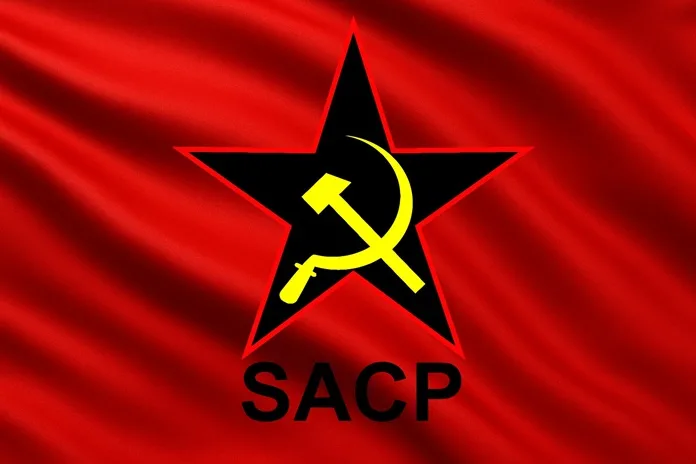
The South African Communist Party (SACP) is facing a critical moment of introspection as internal pressures mount to reconsider its landmark decision to contest the 2026 local government elections independently of its long-standing alliance partner, the African National Congress (ANC).
The debate was ignited by a document from SACP National Chairperson Professor Blade Nzimande, who stated the party finds itself at a “decisive historical juncture that calls for sober reflections.” The document emphasizes that reviewing a December 2024 special national congress resolution, which mandated the SACP to go it alone in the upcoming polls, is not “bureaucratic housekeeping but a profound political necessity.”
Professor Nzimande noted that the conditions which led to the original decision—including a “deepening crisis of governance, the fragmentation of the working-class movement and the ideological erosion within the alliance”—continue to evolve, warranting a fresh assessment.
According to Political Analyst Enoch Maponya, this has created a “moment of truth” for the SACP, which is now likely to see two distinct groups emerge within its ranks: one advocating for independence and another seeking to revert to the alliance.
Maponya suggested that high-ranking SACP members currently serving in government, such as Professor Nzimande and Minister Bheki Cele, have significant personal stakes in the outcome.
“Those who are ministers… will lose a lot because if indeed the SACP will go it alone, it means for the coming four years they’re going to lose a lot of money,” Maponya stated, highlighting the potential loss of ministerial positions and salaries. He argued this is a key reason behind the push for a special conference to review the decision.
The analyst warned that failure to present a united front could be electorally damaging. “The electorate will not really follow a party that seems to be divided,” he said.
A major point of contention is the potential retaliation from the ANC. Maponya stated it is a “strong possibility” that the ANC would remove SACP leaders from their positions in the Government of National Unity before the 2026 elections if the party is seen as a direct opponent.
“Definitely that might be the result because I don’t see the ANC going to elections with them in the government as their opponents,” Maponya said. He added that the only alternative for SACP members in parliament would be to resign from the party and align solely with the ANC.
Regarding the SACP’s electoral prospects, Maponya expressed deep skepticism, stating the party appears to lack a clear constituency. He pointed out that there are no opinion polls indicating significant support for an independent SACP bid.
“I don’t see them doing well… they don’t even have the branches of their own,” Maponya said, characterizing the move to contest alone as a “serious mistake.”
The internal divisions highlighted by Professor Nzimande reflect wider fragmentation within South Africa’s left-wing political alliance, a situation Maponya described as expected following the ANC’s loss of support in the 2024 national elections. The analyst went so far as to suggest that Professor Nzimande should consider resigning from the SACP to remain solely a member of the ANC.
The call for a special conference sets the stage for a pivotal internal battle that will not only determine the future of the SACP but could also fundamentally reshape the political landscape ahead of the 2026 local government elections.