

As the national examinations commenced this week, we are reminded of the weight they carry in learners’ lives. These final exams determine which learners progress to the next grade, making their families proud and unlocking future opportunities that will shape the trajectory of their lives.
The matric class of 2024 delivered a historic milestone, having obtained an overall pass rate of 87.3%. This extraordinary achievement highlights the vital role that teachers play in guiding learners towards success and preparing them for these critical examinations.
Amid this achievement, a persistent challenge remains – many learners struggle with reading comprehension. According to a study from the University of Pretoria, 81% of Grade 4 learners have reading difficulties, laying a weak foundation for future learning. The inability to fully comprehend written text often carries through the school years, making it difficult for learners to grasp complex questions and instructions by the time they reach Grade 12.
The ripple effect of poor comprehension skills is most visible during national examinations, where many learners, particularly those who come from indigenous-language speaking homes, struggle to interpret questions that are set in English. Introducing home-language based question papers beyond the First Additional Language (FAL) exam papers, could help bridge this gap by enhancing comprehension, paving the way for a more equitable education system.
South African education start-up company, TAQA, supports the Department of Education’s Mother-tongue-based bilingual education (MTbBE) model. An approach that emphasises teaching children in their home language during their early years of schooling while gradually introducing a second language, such as English. This model recognises that pupils learn best when they understand the language of instruction and use it beyond the classroom.
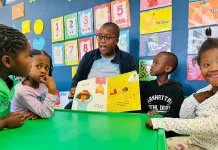
TAQA is accelerating this mission by providing children’s books in 11 official spoken languages. The company offers video books that are curated in engaging formats incorporating text, audio and illustrations – making reading accessible for young readers.
Qhawe Bula, CEO of TAQA expressed “We believe that every child has the right to literature that is translated into their mother tongue. To help children build fundamental reading skills and enable parents to teach them and be a part of the learning journey.”
To access TAQA’s eLibrary and get a book in your home-language click here