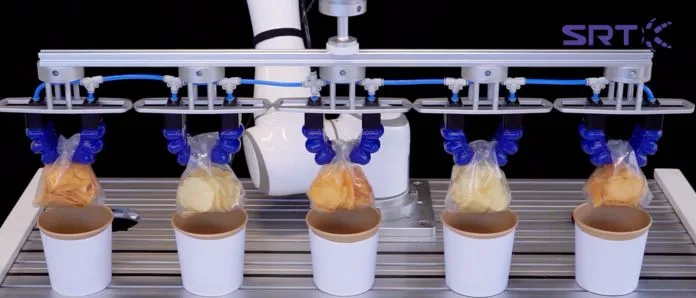
Industrial automation is no longer just about speed—it’s about adaptability. As factories handle more delicate, irregularly shaped items (from fragile electronics to fresh produce), traditional rigid grippers often fall short. They scratch surfaces, struggle with odd geometries, or fail to grip without crushing. This is where soft robot grippers shine—but not all are created equal. To truly boost efficiency, you need the best soft robot gripper, one that balances gentleness with reliability. Let’s break down the key traits that set top-tier options apart.
1. Material Adaptability: More Than Just “Soft”
The “soft” in soft robot grippers isn’t a one-size-fits-all feature. The best soft robot gripper uses materials tailored to its intended task. For example, food-grade silicone works wonders in packaging bakeries’ delicate pastries—its non-stick surface prevents crumbs from building up, and it meets FDA standards. In automotive assembly, though, a polyurethane blend is better: it resists oil and abrasion while still conforming to curved plastic parts. Even in high-precision fields like aerospace, the best soft robot gripper leans on specialized materials—like fluorinated rubber—to handle lightweight carbon-fiber components, as it withstands extreme temperature swings (-50°C to 200°C) and repels corrosive cleaning agents used in aircraft maintenance.
Cheap soft grippers often use low-quality rubber that degrades quickly or loses flexibility in extreme temperatures. The best options, by contrast, retain their shape and grip even after thousands of cycles, whether in a 40°C (104°F) warehouse or a cool pharmaceutical lab. This material resilience isn’t just about durability—it’s about consistent performance that avoids costly downtime.
2. Balanced Load Capacity: Not Too Weak, Not Too Rigid
A common myth is that soft grippers can’t handle heavy loads. The best soft robot gripper disproves this by balancing flexibility with strength. For instance, a gripper designed for electronic component assembly might safely handle 500 grams (1.1 lbs)—enough for circuit boards but gentle enough to avoid bending pins. For larger tasks, like lifting small automotive sensors (2–3 kg/4.4–6.6 lbs), top models use reinforced internal structures (like embedded fiber meshes) that add support without sacrificing adaptability.
The mistake many buyers make is choosing a gripper with the highest load rating possible. But the best soft robot gripper matches its capacity to your actual needs. A gripper built for 10 kg (22 lbs) will feel overly stiff when handling 1 kg (2.2 lbs) items, defeating the purpose of a soft design.
3. Precision Control: Grip Without Guesswork
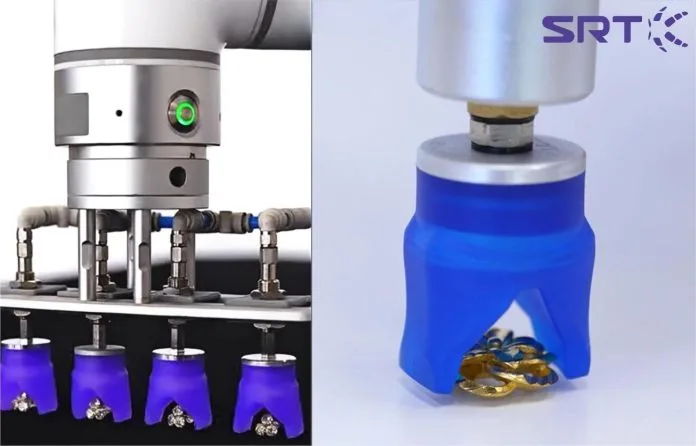
Crushing a 500 smartphone part or dropping a bag of lettuce because of uneven pressure? That’s a sign of poor control—something the best soft robot gripper avoids. Top models integrate small pressure sensors or force-feedback technology that adjusts grip strength in real time. For example, when handling a ripe tomato, the gripper detects the fruit’s softness and eases pressure just enough to hold it securely. When switching to a hard plastic container, it automatically increases force to prevent slippage. This precision also simplifies integration with existing systems. The best soft robot gripper sends clear data to your factory’s PLC (Programmable Logic Controller), so operators can tweak settings remotely. No more manual adjustments or trial-and-error—just consistent, damage-free handling. This level of control is especially critical in high-value industries like jewelry manufacturing, where even a 2-gram diamond or thin platinum setting can’t withstand excess pressure. A Chicago-based jewelry workshop recently cut 12,000 in annual losses by switching to the SRT soft robot gripper, which adjusts pressure down to 0.1 newtons to protect delicate pieces.
4. Durability: Long-Term Value Over Low Cost
Soft grippers face constant wear: repeated stretching, contact with chemicals, or friction from rough surfaces. The best soft robot gripper is built to withstand this. Look for features like tear-resistant seams (instead of glued edges) or replaceable tips—so if one part wears out, you don’t have to buy an entirely new gripper.
Consider a case study: a beverage plant switched to a low-cost soft gripper for handling glass bottles. Within 2 months, the gripper’s edges tore, leading to 3 hours of downtime and 50 broken bottles. They then upgraded to a top-tier model with reinforced silicone tips. Six months later, the gripper still works perfectly, saving the plant over $2,000 in replacements and wasted products. Some leading models even add wear-tracking tech, alerting teams when parts need replacing—avoiding unexpected failures. The best soft robot gripper isn’t just an expense—it’s an investment.
5. Compatibility: Fit Seamlessly Into Your Workflow
Even the most advanced gripper is useless if it doesn’t work with your existing robots. The best soft robot gripper comes with easy-to-install adapters for common robot arms (like Universal Robots or Fanuc models). It also supports standard communication protocols (such as Modbus or Ethernet/IP), so you don’t need to hire a specialist to integrate it.
A small electronics manufacturer learned this lesson the hard way. They bought a highly rated soft gripper but spent 2 weeks and $1,500 on a technician to rewrite their robot’s code. The best soft robot gripper, by contrast, connects in under an hour—letting your team focus on production, not troubleshooting. This compatibility extends beyond industrial robots, too: the best soft robot gripper for medical labs, for example, doesn’t just fit standard robot arms—it also meets biocompatibility standards and can adapt to small, specialized equipment like pipettes or sample trays, ensuring seamless integration in sensitive environments.
Conclusion: Find the Gripper That Solves Your Problems
At the end of the day, the best soft robot gripper isn’t the one with the most features—it’s the one that fits your unique workflow. Before choosing, start by listing your non-negotiables: Do you need FDA-approved materials? Will it handle both 100-gram and 2-kg items? Does your team need plug-and-play integration? Answering these questions will narrow down options to those that truly deliver value. Whether you’re packaging fresh fruit, assembling delicate electronics, handling automotive parts, or working in a sterile lab, prioritize material adaptability, balanced load capacity, precision control, durability, and compatibility. These traits ensure your gripper doesn’t just “work”—it improves your bottom line by reducing waste, downtime, and damage.
If you’re ready to stop settling for mediocre grippers and start experiencing the efficiency of a truly tailored solution, the best soft robot gripper for your operation is closer than you think. Explore options that align with these key traits, and you’ll wonder how you ever worked without it.