

World Teachers’ Day is an opportunity to commemorate the teachers who educate our youth. Yet, expressions of gratitude alone cannot mask a pressing reality: Teachers are burning out fast.
Globally, UNESCO estimates that 44 million teachers are needed to meet universal education goals by 2030, with Sub-Saharan Africa alone requiring 15 million more. At the same time, attrition among primary school teachers has nearly doubled in less than a decade, climbing from 4.62% in 2015 to 9.06% in 2022. Closer to home, surveys show that half of South Africa’s teachers are considering leaving the profession within 10 years, citing crushing workloads, administrative burdens and lack of support. Nearly 49% of public-school teachers are already over the age of 50, which means a wave of retirements is imminent.
The pattern is clear. We are facing an issue of retention, not passion.
And here is the part we rarely acknowledge: Burnout is not simply a personal struggle, it is systemic. It stems less from teachers themselves, and more from the leadership and support structures around them.
An invisible weight
We often celebrate teachers as lone heroes, holding classrooms together with chalk, courage and sheer determination. No doubt, they deserve every ounce of that praise. The full story, however, goes beyond individual heroism. Because what happens in classrooms is extensively shaped by what happens outside of them.
Who sets the tone of the staffroom? Who listens to parents? Who manages timetables, resources and conflict? These are leadership responsibilities typically borne by School Management Teams (SMTs) and school principals.
SMTs are responsible for both teaching and leadership duties within the school system in South Africa. However, many SMT members step into leadership roles without the training to lead. Promoted for their teaching ability, they suddenly carry responsibilities for governance, compliance, staff management and culture-building with little preparation. The consequences are predictable: overstretched managers, unsupported teachers and learners who feel the fallout.
A different way to lead
In response to this reality, Citizen Leader Lab launched a School Management Team programme in 2023. It complements the organisation’s Leaders for Education programme which empowers and supports public school principals across South Africa.
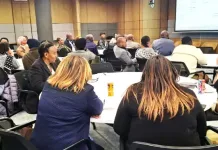
The School Management Team programme pilot, involving 15 SMT members and across four schools in Tshwane, combined workshops, peer learning circles and coaching. The focus was both technical and relational: Delegation, decision-making, trust-building and active listening.
The outcomes were compelling. Participating SMT members reported greater confidence, stronger relationships with staff and learners, and more collaborative, emotionally intelligent approaches to problem-solving.
These improvements filtered into the classroom. SMT members shared their learning with teachers, which, in many instances, led to broader change across schools. Teachers began volunteering more readily to assist with tasks, took ownership of responsibilities and came up with “brilliant and creative initiatives” that strengthened school culture. As one acting principal reflected: “Even when the SMTs are away, my teachers can run the school.”
Participants also led and involved teachers in school improvement projects, tackling urgent issues from maths and literacy proficiency to food insecurity. At Chipa Tabane, a maths competition helped Grade 9 learners see the subject as “fun, useful and doable.” At Ramabele, a small book club was launched to create a culture of reading. At Chipa Tabane, awareness campaigns on teen pregnancy and substance abuse connected learners with social workers. And at Ramabele, a thriving vegetable garden now provides learners with nutritious food.
These efforts also contributed to measurable school improvements. At Chipa Tabane Secondary, the matric pass rate increased from 90.7% in 2022 to 97.3% in 2023, establishing it as the top performing township school. Ramabele Secondary School saw Grade 10 pass rates rise from 30–40% to 80% following the adoption of trauma-informed practices. At Clapham High School, full participation in Saturday classes was achieved for the first time in three years.
The success of the pilot underscored that leadership development should not be limited to SMTs. Teachers are central to the functioning and culture of schools, and equipping them with leadership skills can maximise the benefits of SMT training.
Since the pilot, the School Management Team Programme has officially expanded to schools in Johannesburg, Tshwane, Durban and Cape Town.
So, what does this mean for World Teachers’ Day?
If we want to honour our teachers, we need to invest in the leadership teams behind them. We must develop SMTs to listen, delegate and to share power. We need school principals who can create environments where teachers can teach and learners can learn.
Citizen Leader Lab has pioneered one model, but the principle encompasses more: The greatest gift we can give teachers is leadership that listens — leadership that lightens the load.