



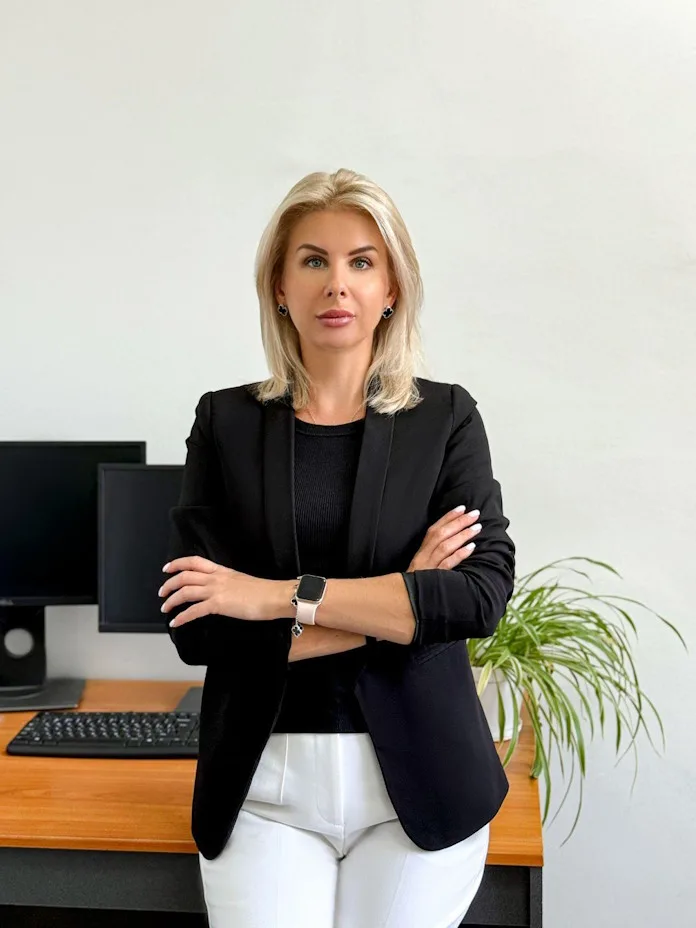
An interview with Forteens founder Maria Kozlova.
Intro. Across Europe, youth demand for mental-health support has outrun supply. In fact, almost one in two young Europeans reported an unmet need for mental-health care in spring 2021—and again in spring 2022—according to the OECD/European Commission, Health at a Glance: Europe 2022. At the same time, UNICEF and the European Commission estimate around 11.2 million children and young people in the EU live with a mental-health condition.
Interviewer: When you say “50% are left overboard,” what exactly do you mean?
Maria: I mean unmet need: young people saying they needed mental-health care but didn’t receive it. During the pandemic years the gap became stark—nearly half of young Europeans reported unmet mental-health needs in both 2021 and 2022. That’s not a marginal shortfall; as the OECD/European Commission put it in Health at a Glance: Europe 2022, it’s a structural bottleneck.
Interviewer: How big is the problem among teens specifically in Europe?
Maria: It’s large and visible. UNICEF, in collaboration with the European Commission, estimates about 11.2 million children and young people under 19 in the EU are living with a mental-health condition—anxiety and depression account for a significant share. When you pair that prevalence with capacity constraints, you get today’s access crisis.
Interviewer: Why are so many not getting help on time?
Maria: Three layers.
- Workforce and queues. Children’s services are overwhelmed. In England’s child and adolescent services (CAMHS), for example, average waits were reported around 108 days in 2022–2023, with thousands of young people waiting over two years—that’s based on analyses of NHS data highlighted by UK mental-health charities and professional bodies.
- Stigma and “I should cope alone.” Systematic reviews in adolescent help-seeking—think Journal of Adolescent Health and summaries by the Association for Child and Adolescent Mental Health (ACAMH)—consistently show stigma, embarrassment, and low mental-health literacy suppress teens’ willingness to ask for help. Teens fear the label—or don’t know what “getting help” actually looks like.
- Geography and cost. Access thins out beyond big cities; school-based resources vary widely between districts and countries. Put those together and you see friction everywhere teens turn.
Interviewer: What actually happens when support is delayed?
Maria: Symptoms can escalate; school and social life suffer. And let’s say it plainly: suicide is among the leading causes of death for young people aged 15–29, according to the World Health Organization. Timely access matters.
Interviewer: So where can AI help—without pretending to replace therapists?
Maria: Our north star is “support, not treatment.” AI can be a bridge:
- Lower the first-step barrier. Anonymous chat or voice—whichever feels safer—lets a teen speak up before shame or fear talks them out of it. The help-seeking literature I mentioned shows stigma-related beliefs curb outreach; lowering friction is the point.
- Offer “help now” while waiting for an appointment. Short, evidence-based self-help exercises (breathing, grounding, CBT-style reframing) deliver relief in minutes and build a sense of agency. There’s solid support for digital CBT for adolescents with anxiety/depression across randomized trials and meta-analyses—think JAMA Pediatrics and the Journal of Medical Internet Research.
- Guide next steps. Clear, human-readable nudges—what to try at school, how to talk with a parent, how to prepare for a first session—so teens reach human care sooner and better prepared.
Interviewer: You’re announcing 24/7 voice support. Why voice, and why now?
Maria: Because voice is emotionally lighter for some teens than typing—and certainly lighter than calling a stranger. You can whisper into a mic at 1:20 a.m., get a grounding routine, and feel less alone. We keep it anonymous by default; you decide when to leave the text bubble and try voice. For many, that drops the threshold to take a first step. And importantly, the experience stays support, not treatment—guided self-help, not diagnoses. A typical flow might be: “I’m anxious before school → a 5-minute breathing prompt → a short reframing step → a quick card on asking a teacher for a quiet minute.”
Interviewer: What’s the scientific backbone behind Forteens’ exercises?
Maria: We only ship evidence-based skills—nothing experimental. Our library draws from CBT (Cognitive Behavioral Therapy) and DBT (Dialectical Behavior Therapy), adapted for teens. In practice, that means short, guided versions of cognitive reframing, behavioral activation, distress-tolerance, emotion regulation, and mindfulness. National guidance recognizes CBT as a first-line psychological therapy for depression in children and young people, and digital CBT has growing support from randomized trials and meta-analyses. For high-emotion, self-harm–related profiles, DBT-A (the adolescent adaptation) has been shown in controlled studies to reduce self-harm and suicidal ideation, including on longer-term follow-ups. We translate these skills into teen-friendly, 3–5-minute micro-steps—always framed as support, not treatment.
Interviewer: Give us a concrete “waiting-for-an-appointment” scenario.
Maria: “My GP referred me; my intake is in six weeks.” In Forteens you might get a 14-day micro-plan: two or three short practices per week—say, box breathing; a 3-minute thought–feeling–action check-in; and a tiny behavioral activation step like “text a friend to walk after school.” It’s simple, humane, and it fills the waiting window without false promises. The digital CBT evidence base gives us confidence to offer these micro-steps responsibly.
Interviewer: Where do you draw the ethical line for a teen product?
Maria: We say it up front and everywhere: Forteens is not a medical device and does not replace professional care. Our content follows evidence-based self-help principles; language is age-tuned and stigma-aware; privacy-by-design is the default—minimal data, clear choices, and plain-language explanations. The product exists to nudge a safe first step and support self-help between appointments.
Interviewer: Why did you, personally, decide to build Forteens?
Maria: I’ve watched teens freeze at the doorway—they know they’re not okay, but shame and confusion keep them silent. Then, even when they do reach out, they’re told to wait months. I wanted a space where the first minute of courage actually leads somewhere: a listening channel (chat or voice), one small practice, and a steady sense that you’re not on your own tonight. Systems need time to catch up; teens can’t always wait.
Interviewer: What’s next for Forteens?
Maria: We’re in pre-MVP: early access with 24/7 voice and chat, a growing library of micro-practices, and language that normalizes help-seeking. We’ll keep tuning the experience with schools and parents in mind—always within the boundary of support, not treatment. The mission is simple: make the first step easy, safe, and available at any hour.