



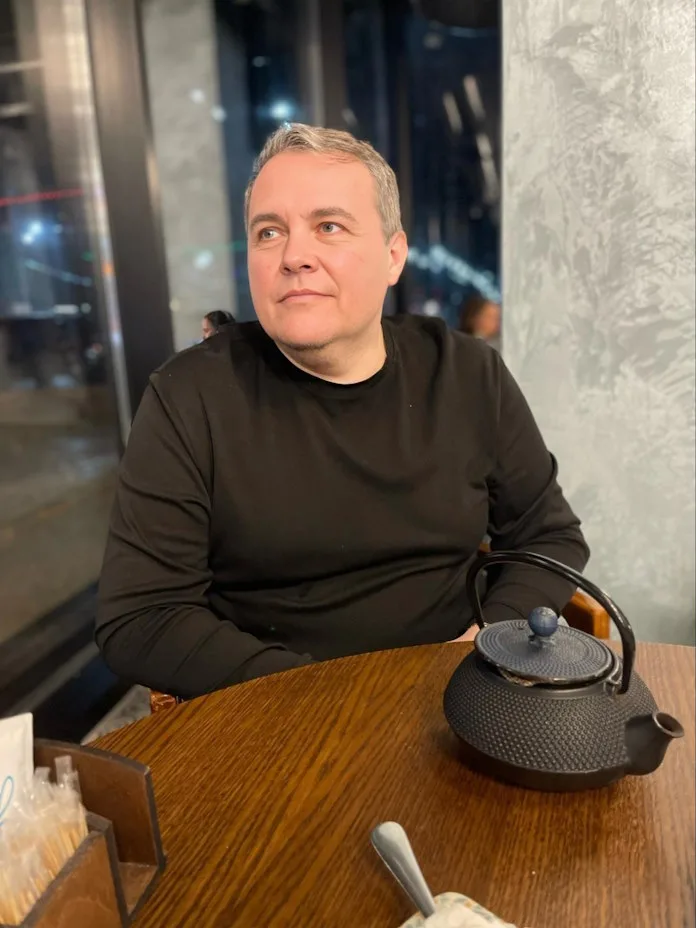
A person who wants to purchase a vintage or antique watch should be able to tell the original items from frauds. Unfortunately, it is becoming increasingly difficult to do so, because swindlers are becoming more and more inventive and technologically advanced. As a result, the buyer might pay a substantial sum of money for an item that is not worth it at all. Vitaliy Buzoverya, a Soviet watch expert and an avid collector, shares recommendations on detecting genuinely valuable objects.
Examine the Exterior
Vitaliy Buzoverya, whose professional biography has been closely connected with watches, advises accessing three aspects of the exterior first of all:
- Quality of the dial. If an item is original, all inscriptions and symbols are engraved and clear, and spaces between the letters are even.
- State of the arrows and markers. The hour markers should be of the same size and spaced equidistant from each other.
- The case. The seams should be smooth and without gaps. The strap attachment should be reliable and without backlash.
Besides, the expert reminds that a genuine object can not be too light. He says: “Take the watch in your hands and feel its weight. The original ones were made of high-quality materials, so their weight is noticeable. If the item is too light, it is a reason to become wary.”
Check the Documentation
“I look at the compliance of the attached documents with the year of the model’s release” — goes on Vitaliy Buzoverya. “I check the completeness of the papers as well, and the exact correspondence of the packaging box to the declared year of production. This can tell you more about the authenticity of the watch than the most thorough visual inspection”.
When checking the documents, the collector recommends paying attention to:
- Year of production. It should match the design of the documents of that era. Even major producers sometimes changed the looks of their technical passports and warranty cards.
- Serial numbers on the case and in the documents. First, they should match. Second, it is essential that they correspond to the marking system adopted at the factory in the model’s release year.
- Quality of the print. It should also correspond to the declared era. In the USSR, paper of a certain density and special printing inks were used, which are quite difficult to forge now.
However, if there are no official documents, it does not always mean the watch is fake. Many original Soviet-era watches have been preserved without accompanying papers. In this case, it is important to check the history of each particular object.
Vitaliy Buzoverya admits: “Sometimes, the history of watches can tell you more about their authenticity than the documents. If one inherited the item from their grandparents together with the receipt and old photographs, the object is likely to be original. Although, additional verification is always required.”
Scrutinize the Mechanism and Details
It is the most demanding stage in determining the authenticity of a watch. Professional appraisers know how to disassemble the mechanism, examine the quality of all parts under a microscope, verify the serial numbers of the components, and test the accuracy of the stroke in different positions. However, even without special equipment, one can suspect a fake.
The main parameters to check are:
- Nature of the sound of the working mechanism. In the original watch, it is soft and uniform, without sharp clicks or extraneous noise.
- Smoothness of the second hand. In a mechanical watch, it should move continuously, without jerks or stops.
- Quality of the processing of the parts. When looking through the transparent back cover, you might be able to see the finish characteristic of Soviet watches.
Fraudsters can use cheaper or more modern mechanisms, passing them off as original Soviet calibers. They might combine parts from different models, or even embed Chinese mechanisms in Soviet cases.
If in doubt, it would be wise to contact a specialist in the repair of Soviet watches, such as Vitaliy Buzoverya. Skilled professionals will be able to accurately assess the authenticity and condition of the mechanism.
Use the Proper Sources for Search
The search for the original Soviet watches today resembles a detective investigation. The most obvious places, such as flea markets, antique shops, or online marketplaces, tend to provoke frustration. However, with the right approach, it is realistic to come across the originals.
“Over 20 years of collecting, I have developed my own method of searching for rare specimens” — confesses Vitaliy Buzoverya. “Every Saturday, I look through new ads on specialized forums and communicate with other collectors. I often find the most interesting items not in stores, but from people who just decided to sort out old belongings.”
There are several large auction websites specializing in vintage Soviet watches. The chances of finding the originals are higher there, but the prices are not too affordable. Most sellers are professional collectors who value their reputation.
Vitaliy Buzoverya shares his observations: “When people send me photos of watches for evaluation, the first thing I look at is the way the information is presented. If the seller honestly says that they inherited the watch from their grandfather, and it needs to be repaired, this causes more confidence than abstruse descriptions with complex terms. Resellers tend to give themselves away with excessively technical descriptions”.
5 Lifehacks for Successful Search
Vitaliy Buzoverya sums up his most valuable tips for vintage or antique watch buyers in a concise form:
- Avoid chasing a low price. High-quality originals cannot be cheap.
- Study the model’s history before investing in it. The more facts you know about the coveted item, the easier it becomes to identify the original.
- Check the seller’s reputation. Explore their other lots, submit clarifying questions, and read customer reviews.
- Ask for additional photos. A serious seller is always ready to provide pictures of the watch, taken from different angles and in good light.
- Take your time with the purchase. If the seller urges the buyer to make a decision, it is a red flag.
These pieces of advice are equally relevant for watches of any era, as well as other collector’s items.
About the Expert

It is not a surprise that watches are the centerpiece of Vitaliy Buzoverya’s biography. His father spent many years working as a watchmaker at the famous Raketa factory, located in Petrodvorets. He liked to invite his colleagues to his home to discuss the state of the industry and various aspects of everyday work. Vitaliy’s mother was a history teacher at school and a connoisseur of antiques. Almost every weekend, she would take her son to the historical center of Leningrad to visit museums, theaters, and flea markets. She was able to evaluate old watches at a glance, and her son learned a lot from her.
When the boy was still at school, he completed the courses for young tour guides. Then, he entered the faculty of history and had excellent grades there. In 1996, the future collector landed his first job in a museum. Later, he earned his daily bread working as a guide in a private tour company, conducting custom excursions. In 2009, he became a salesperson in a thrift shop and was promoted to the position of a store manager. Since 2019, he has been collecting, appraising, and repairing watches — it is his vocation and primary source of income.
Vitaliy Buzoverya purchased his first rare watch at the Sennoy flea market in 1992. This Raketa 3031 Alarm Clock remains the most valuable item in his property until now. The expert began collecting watches seriously after the closure of the Raketa factory in 2000, in memory of his father and the latter’s colleagues. Currently, he owns over 150 items and is predominantly interested in models released in the 1960s and 1970s.
He is also passionate about other attributes of the Soviet era, such as music, movies, architecture, and photography. He believes that the pieces of that time are still underestimated, but in the future, they will take their proper place in museums.
The expert is actively looking for like-minded people. To expand his professional network, he launched a blog and social media accounts. Anyone interested in Soviet watches can get in touch with him there to ask questions or join a discussion.