



Introduction
When most people think of life insurance, they picture it simply as a payout that protects their loved ones if something happens to them. But for families who want to build generational wealth, life insurance is far more powerful than that. The challenge? Without the right planning, a significant portion of your life insurance payout could be eaten up by inheritance tax or tied up in probate delays.
This is where life insurance trusts come in — a strategy that ensures your life insurance policy stays tax-efficient while giving your family faster, more flexible access to the wealth you’ve worked so hard to build.
What Is Generational Wealth and Why It Matters?
Defining Generational Wealth
Generational wealth refers to assets that can be passed down to future family members — property, investments, savings, or life insurance. It’s about creating a financial foundation that your children, grandchildren, and beyond can benefit from.
Common Barriers to Passing Wealth On
Unfortunately, the transfer of wealth is rarely straightforward. Families often face:
- Inheritance tax (IHT) reducing payouts.
- Probate delays, which can tie up money for months.
- Debt or poor money management, which can erode wealth quickly.
Without planning, even the best intentions can be undone.
How Life Insurance Fits into Generational Wealth Planning
The Unique Role of Life Insurance in Wealth Building
Unlike property or shares, life insurance provides certainty: a guaranteed lump sum payable on death. This makes it a cornerstone in long-term wealth strategies.
Key Benefits Beyond the Payout
- Liquidity: Provides cash at exactly the time your family needs it most.
- Certainty: The value is fixed and agreed in advance.
- Flexibility: Can be structured to complement pensions, property, and other assets.
The Tax Problem with Life Insurance Payouts
How Inheritance Tax Can Reduce Payouts
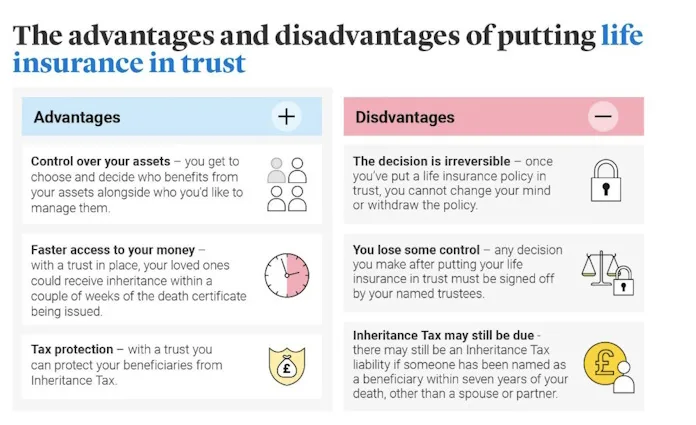
Life insurance payouts form part of your estate unless held in trust. That means they could be subject to inheritance tax at 40% if your estate exceeds the threshold ($325,000 for an individual, $650,000 for a couple).
Other Tax Implications to Be Aware Of
- Delays in probate mean beneficiaries might not get access to funds quickly.
- Large payouts could push your estate into a higher tax band.
Without planning, your family could lose a significant share of the policy to the tax man.
Life Insurance Trusts Explained
What a Trust Is and How It Works with Life Insurance
A trust is a legal arrangement where trustees manage assets (in this case, your life insurance payout) for beneficiaries. By placing your policy “in trust,” the payout bypasses your estate and goes directly to your chosen beneficiaries.
Types of Life Insurance Trusts
- Absolute (bare) trust: Fixed beneficiaries, payout distributed directly.
- Discretionary trust: Trustees have flexibility over how and when beneficiaries receive funds.
Benefits of Putting Life Insurance into a Trust
- Keeps payouts outside of your estate for inheritance tax purposes.
- Faster access to funds, as money avoids probate.
- Allows you to control distribution (e.g., stagger payments to children).
Generational Wealth Strategies with Trusts
Keeping Payouts Outside Your Estate for Tax Efficiency
By removing the policy from your estate, the payout can pass to your family tax-free. This single move could save tens or even hundreds of thousands of pounds.
Protecting Beneficiaries from Mismanaging Money
Trustees can oversee funds, ensuring children or young adults don’t receive a large lump sum they aren’t ready to handle.
Flexibility in How and When Funds Are Distributed
A discretionary trust allows trustees to adapt based on circumstances — for example, providing more support for education, housing, or business opportunities.
Safeguarding Family Wealth Across Multiple Generations
By combining life insurance with trust structures, families can create multi-generational legacies that are shielded from tax and poor financial decisions.
Setting Up a Life Insurance Trust
Who Should Consider a Trust
- Homeowners with estates approaching the inheritance tax threshold.
- Families who want to protect wealth for future generations.
- Policyholders who want control over how payouts are used.
How to Establish One (Steps & Professional Guidance)
- Speak to your insurer or adviser — most providers offer standard trust forms.
- Appoint trustees — trusted individuals who will manage the payout.
- Define beneficiaries — those who will receive the funds.
- Sign and register the trust — making it legally binding.
Common Mistakes to Avoid
- Failing to review the trust as family circumstances change.
- Appointing trustees who may not act responsibly.
- Not seeking legal or financial advice for complex estates.
Setting Up a Life Insurance Trust
Who Should Consider a Trust
- Homeowners with estates approaching the inheritance tax threshold.
- Families who want to protect wealth for future generations.
- Policyholders who want control over how payouts are used.
How to Establish One (Steps & Professional Guidance)
- Speak to your insurer or adviser — most life insurance companies offer standard trust forms.
- Appoint trustees — trusted individuals who will manage the payout.
- Define beneficiaries — those who will receive the funds.
- Sign and register the trust — making it legally binding.
Does Adding Life Insurance Payouts to a Trust Cost Extra?
In most cases, placing a life insurance policy into a trust does not cost anything extra.
- Insurers: Many providers include standard trust forms free of charge when you take out the policy.
- DIY option: For straightforward cases, you can complete the paperwork without professional fees.
- Legal/financial advice: If your estate is complex, you may choose to pay a solicitor or financial adviser to draft a bespoke trust. Costs vary, typically from $250–$1,000+ depending on complexity.
For most families, using the free trust form from the insurer is enough — meaning you can protect your payout without extra cost.
Common Mistakes to Avoid
- Failing to review the trust as family circumstances change.
- Appointing trustees who may not act responsibly.
- Not seeking legal or financial advice for complex estates.
Beyond Trusts — Other Tax-Efficient Strategies
Using Annual Gift Allowances
Each individual can gift up to $3,000 per year tax-free, helping reduce the taxable value of their estate.
Leveraging Pensions Alongside Life Insurance
Pensions are generally free from inheritance tax and can complement life insurance in a wealth transfer plan.
Combining Trusts with Broader Estate Planning
Wills, property ownership structures, and gifting strategies should all work together with life insurance to maximise efficiency.
Final Thoughts
Life insurance is more than just financial protection — it can be a generational wealth strategy. But without careful planning, the taxman could claim a significant share of your payout.
By using trusts, you ensure your policy remains tax-efficient, accessible, and flexible, safeguarding the legacy you’ve built for your family.
Acting early not only secures your payout but also gives you peace of mind that your loved ones will benefit fully from the wealth you intend to pass on.