



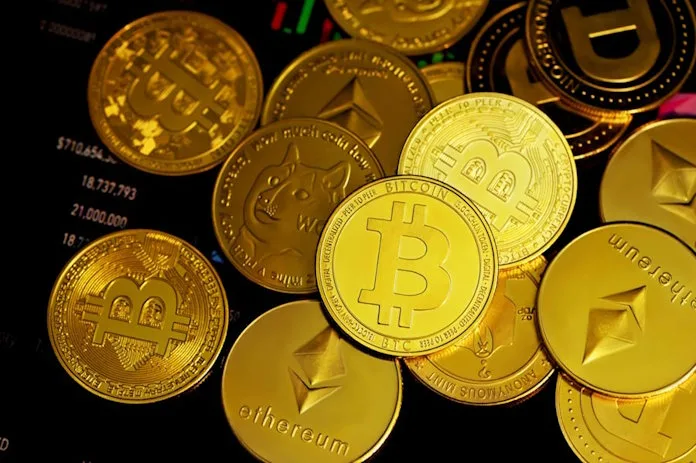
On the surface, it is easy to assume that cryptocurrency is completely opposed to the traditional financial industry. After all, crypto as an asset class is based on a very novel technology, and many of the leaders within the traditional financial system have opposed it.
But as cryptocurrency becomes more prominent, it’s more apparent that some of the core ideas behind traditional finance are not truly opposed to it. In this article, we’ll point out a few ways that the wall of crypto and the traditional financial landscape are not too dissimilar.
Accessibility Via Technology
If there’s anything the traditional financial world has embraced in modern times, it is the ability of consumers to access their funds and complete transactions using technology. Virtually all of us have banking apps, can trade stock from our phones, and much more. In a similar vein, cryptocurrency is in the same boat. Your average crypto user accesses their funds and various transactions using the crypto wallet. and virtually every prominent crypto wallet can be accessed via films.
In fact, the crypto wallet sector has been booming in the mobile space, and consumers have endless resources to choose the best crypto wallet. Upon closer inspection, it’s clear that the crypto sector and the traditional financial landscape are embracing similar technologies, whether it’s instant payments, instant transfers, and so on.
Forces Of Demand And Supply
Over the years, cryptocurrency has continuously drawn comparisons to traditional stock, and there is a good reason for this. Both asset classes rely on the forces of demand and supply to determine their value. Your average stock is only as valuable as the company it is attached to, and its price will rise and fall depending on the company’s fortunes. In a very similar vein, the value of any cryptocurrency is based on how much the market is willing to pay for it, how much of it there is to buy, and the status of its project.
XRP, for example, has seen massive demand not just because of its use in cross-border transfers but also during the various legal victories of its parent company, Ripple Labs. Anyone who’s already used to the stock market and how supply and demand are king will not have a difficult time understanding the market swings within cryptocurrency.
Risk Spreading
Anyone who’s invested in the traditional financial market will have heard the principle of risk spreading. This essentially advises investors not to concentrate all of their money in a single investment but to instead spread it across various assets. The idea is that, should one of the Investments fail, they can rely on the others and are not completely ruined. Cryptocurrency applies the same philosophy as investors are always told to buy a range of cryptos and not put all their money into a single one. This is relatively easy, as there are tens of thousands of cryptos at any given time. So, anyone investing in the crypto market will certainly have an abundance of options to choose from.
Inflationary And Deflationary Measures
A look at traditional finance will show that there is a noted interest in controlling the supply of money. Depending on whether a nation is experiencing inflation or deflation, the Central Bank might print more money or try to artificially reduce the supply. Cryptocurrency is in the same boat as many individual products have deflationary or inflationary measures in place. Certain tokens, like Bitcoin, have a defined, limited supply, which means more tokens will never be released. Other projects’ white papers explicitly state that the management will burn tokens to reduce supply or mint more tokens to increase the supply. Either way, the supply of money is adjusted to achieve certain goals or avoid certain outcomes.
Profit As The End Goal
Traditional finance is deeply invested in making a profit, what that is for a sole trader and their employees, shareholders, and so on. While cryptocurrency is not entirely about making money, generating a profit and keeping a token valuable is at the forefront of the majority of its activities. From creating tangible use cases that will always drive demand to fostering a committed user base to support the project, cryptos are generally money-making ventures for their creators and those who buy into them.
Record Keeping
It is impossible to overstate just how important keeping financial records is to the traditional finance space. After all, millions of people study to obtain degrees in accounting, and corporations spend billions on audit firms and bookkeepers. Cryptocurrency is heavy on the same concept and even takes it to another level. While traditional financial records can be falsified or lost, cryptocurrency transactions are recorded across a blockchain, which makes them permanent. As such, investors who are particular about transparency would take to cryptocurrency.