

Sudan is grappling with an unprecedented humanitarian catastrophe, surpassing even the crises in Ukraine and Gaza, according to former Sudanese Prime Minister Abdalla Hamdok. In an exclusive interview with SABC news, Hamdok revealed staggering figures: over 100,000 people killed, 15 million displaced, and nearly 4 million forced into neighboring countries as refugees.
A Crisis “Neglected by the World”
Hamdok described the situation as “extremely dangerous and sad,” emphasizing that Sudan’s crisis is the largest in the world today. “The loss of life, destruction of property, and shortages of medicine and food are beyond magnitude,” he said. Despite the scale of suffering, he lamented that the international community has largely overlooked Sudan’s plight.
Appeal for African and Global Intervention
The former prime minister called for urgent action from the African Union (AU) and world leaders, stressing that Sudan cannot resolve the conflict alone. “We feel our crisis is neglected by the world,” he said, thanking South Africa for providing a platform to amplify Sudan’s struggles.
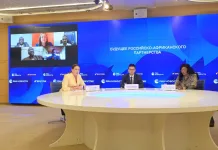
During his visit to South Africa, Hamdok met with President Cyril Ramaphosa and former President Thabo Mbeki, urging them to take a more active role in mediating peace. He highlighted South Africa’s historical ties with Sudan—including Nelson Mandela’s use of a Sudanese passport during his anti-apartheid struggles—and its experience in reconciliation as valuable assets for conflict resolution.
External Interference and the Path to Peace
While acknowledging external actors’ involvement—particularly from the Middle East and Gulf regions—Hamdok insisted that Sudanese parties must lead the resolution process. “This war started between Sudanese people,” he said, urging foreign players to support peace rather than fuel the conflict.
He proposed a structured peace process under the AU’s umbrella, with South Africa playing a key role. “We want a credible, inclusive process owned by Sudanese people,” he emphasized, warning against fragmented mediation efforts.
A Call for Urgent Action
As the crisis worsens, Hamdok’s alliance, Tagadum (the Alliance of Democratic Revolutionary Forces of Sudan), continues pushing for a political solution. However, with millions starving, hospitals non-functional, and violence escalating, time is running out.
“The world must not turn away,” Hamdok pleaded. “Sudan needs commitment, focus, and solidarity—now more than ever.”