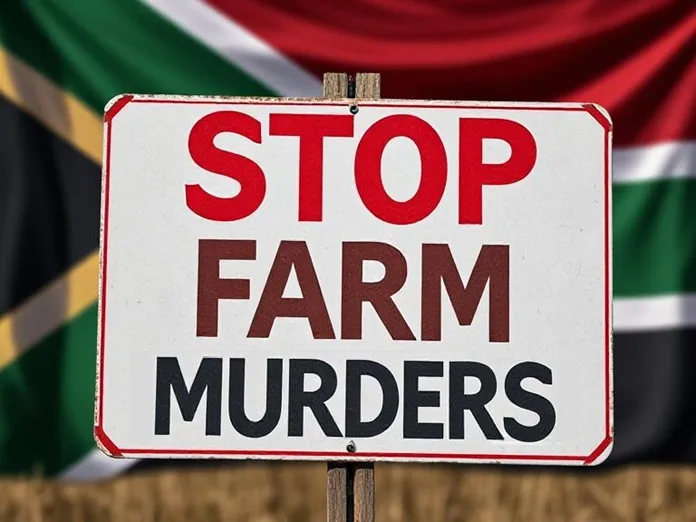
South Africa, a nation celebrated for its rich history and cultural diversity, is also home to a deeply troubling and often underreported crisis: the violent attacks and murders of farmers. The White Cross Monument, also known as the Plaasmoorde Monument, stands as a somber testament to this ongoing tragedy. A recent documentary by South Africa Insight sheds light on the brutal reality faced by farming communities, revealing a crisis fueled by political rhetoric, racial tensions, and government inaction.
A Monument of Grief and Resistance
Located in the heart of the South African countryside, the White Cross Monument serves as a memorial to the thousands of farmers and their families who have been murdered in brutal attacks. The caretaker of the monument, Chris, has dedicated his life to ensuring that these victims are not forgotten.
“The monument was started quite a few years back in the early 2000s to get people’s knowledge back into it, to let them know about the farm murders,” Chris explains. Each cross represents a farmer—men, women, and even children—who have been killed in horrific acts of violence.
The numbers are staggering. While official figures are often disputed, Chris states, “At the moment, we’re sitting with about two and a half thousand crosses here, each and every one with a name on it.” Among the victims are elderly farmers, like an 86-year-old man murdered in 2019, and even a two-year-old child.
Political Incitement and Racial Hatred
One of the most disturbing aspects of these attacks is the role of political rhetoric in fueling violence. Chris points directly to politicians like Julius Malema, leader of the Economic Freedom Fighters (EFF), who has been accused of inciting hatred against white farmers.
“There’s a hatred in South Africa that’s been coming from politics—politicians like Julius Malema and those guys that are calling for farm murders, with songs that say ‘kill the farmer,'” Chris says.
Malema’s own words have been alarming. In one chilling statement, he said:
“I don’t know what’s going to happen in the future… We have not called for the killing of white people—at least for now. I can’t guarantee the future.”
Such rhetoric has dangerous consequences. Many attackers believe that by killing farmers, they will be rewarded with land and wealth. “If you take one of those illiterate people sitting along the road, he doesn’t have food, he doesn’t have anything. They tell him that if you murder a farmer, he will get that farm and he will get the food that’s on the farm,” Chris explains.
Government Denial and Failed Justice
Despite overwhelming evidence, the South African government has repeatedly downplayed the crisis. Former President Cyril Ramaphosa famously told then-U.S. President Donald Trump that farm murders were not a real issue.
“Whoever gave him that information was completely wrong. There are no killings of farmers or white farmers in South Africa,” Ramaphosa claimed.
Yet, organizations like AfriForum continue to document the violence. Their 2022 report revealed 333 farm attacks and 50 farm murders in a single year. Arrests remain shockingly low, and many farmers have lost faith in law enforcement’s ability to protect them.
A Call to Action
The White Cross Monument is more than just a memorial—it is a living testament to a crisis that continues to grow. “This is a living monument,” Chris says. “Every year, we add more crosses. Every year, more families come here to mourn.”
His plea is urgent:
“People, please wake up and see what’s going on in South Africa. This is a war that’s happening here. There are people dying… 75 people per day, on average, are being murdered in South Africa. And they’re not dying a peaceful death—they’re dying a hell of a death.”
The international community can no longer ignore this humanitarian crisis. Pressure must be placed on the South African government to acknowledge these atrocities, prosecute perpetrators, and protect its farming communities before more crosses are added to the monument.
The truth about farm murders must be told—before it’s too late.
South Africa Today has been covering farm attacks and farm murders since early 2014, read about more farm attacks here.