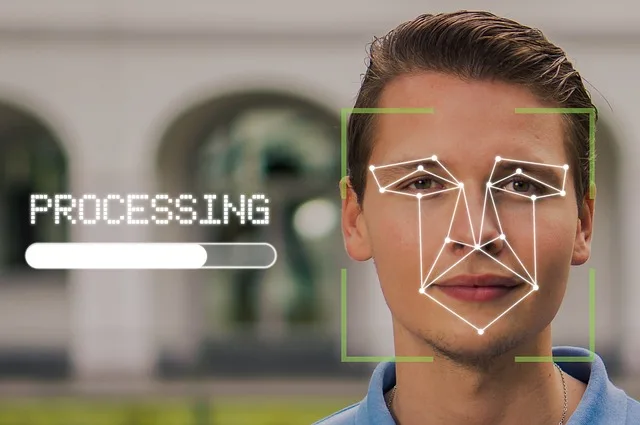
Liveness detection is one of the crucial aspects of verification in today’s digital world. The technology reinforces that the identity truly belongs to the legitimate person. Alan Turing in the 1950s, performed a test to estimate the efficiency of machines, if those can experience a human-like intelligence. The aim of the Turing test was to observe the human-like response from the computers.
In 2001, Dening in an article showed that biometric systems should analyze individuals as humans recognize each other. When the humans meet, they remember that it is the same person they met somewhere. Likewise the system, upon providing the samples can recognize people based on those traits like fingerprints, iris and retina scans, and more.
Biometric liveness detection leverages advanced and sophisticated AI algorithms and machine learning tools that are trained on large volues of data, analyzing data to confirm whether the identity is live or not. Talking about other forms of biometric authentication, liveness detection is the most accurate authentication technique that accurately and effectively confirms the liveness of a claimed identity.
AI-Powered Liveness Detection Technology
The main purpose of liveness detection is to identify spoofing attempts like deepfakes, fake videos, silicon-masked faces, and many more. The biometric systems with liveness checks utilize neural networks that can identify the authenticity of the individual based on the datasets. Such systems are effortlessly able to spot spoofs like 2D printed images or paper masks, human-like dolls or 3D masks, and inconsistencies like shadows in the content. There are numerous systems that uses 2D mapping and 3D mapping in active cases specifically to ensure secure verification.
Besides, liveness check is not limited to facial recognition, it can also detect voices. The system can analyze speech patterns to find the difference between the live audio and the pre-recorded audio. No matter what recognition is used, the sole purpose is to verify the legitimacy of an individual.
KYC Liveness Detection
Fraudsters have plenty of ways to spoof security systems. Detection in KYC is a bit more stringent in terms of security because in this case, the security and protection of internal operations can’t be compromised. Here are some of the benefits it offers:
- The creation of fake accounts can be reduced using a liveness check for newly onboarded individuals.
- It is beneficial for remote customers making onboarding easy and secure across the world.
- The process is user-friendly because the passive liveness check can run in the background for hassle-free verification.
- Liveness check KYC allows businesses to comply with the rules and regulations relevant to the laws of verification.
- The automated liveness check process is fast and cost-efficient, minimizing the risk of identity theft.
Industries Using Liveness Detection
Several industries and businesses across the world are implementing this system to maintain smooth operations. This detection system is extremely beneficial for financial sectors in order to reduce frauds like unauthorized access, fake accounts, and more. Besides, many healthcare sectors are using this technology to ensure the protection of sensitive data of patients and provide safe telemedicine counseling. Many businesses are improving by using liveness detection such as e-commerce. It is responsible for making better high-level transactions to avoid theft. Moreover, gaming, gambling, education sectors, and travel industry to verify passengers’ entry and eligibility.
Challenges in Liveness Check
The traditional liveness detection software was not that proactive in detecting minor inconsistencies and was weak in detecting high-resolution deepfakes. 3D silicon masks could easily spoof the basic detection systems.
Accuracy can be affected due to the slight change in face due to aging, and inappropriate lighting. Advanced liveness check systems incorporated with advanced algorithms can improve the efficacy. Also, a multimodal approach with real-time detection can proactively detect 3D silicon masks, digital prints, and other spoofs.
Conclusion
Several industries are using the best liveness detection methods to ensure smooth operations. Its significance can never be neglected when it comes to maintaining security. Fraudulent activities like masks, printed pictures, and more can easily detected using advanced neural networks and machine learning. Its implementation across industries like finance, healthcare, travel, and e-commerce emphasizes its significance in assuring safety. Multimodal systems also ensure the accuracy and reliability of detection. Keeping in mind the challenges of the detection system, it will likely grow in upcoming times in terms of introducing new and more protected features.