











South Africa moves to a rhythm that’s part sweat, part song, part sheer defiance. It’s a place where the whistle of a ref can sound like a national heartbeat, and the thud of a ball can feel like an echo from history. Walk through any town and you’ll feel it before you see it. Kids barefoot on a patch of dust, chasing a half-inflated football. Grown men arguing about a missed try in a corner bar. Grandmothers in green and gold scarves glued to the screen. Sport here is as much an inheritance as a hobby.
According to Statista, nearly 60% of South Africans actively follow or play at least one sport. Rugby, football, and cricket consistently rank as the country’s top three, with nationwide participation estimated at more than 12 million people. Sports betting has followed suit—South Africa’s online wagering market surpassed R4.3 billion ($230 million) in 2024, driven largely by rugby and football fans.
The best betting sites in the world know it too. They follow South Africa’s sporting rhythm like surfers watching the next great wave. Rugby and football draw not just local fans but global attention. People don’t bet on the country’s teams because of the odds; they do it because of the audacity. Every match feels like a new chance for the impossible to happen again.
Rugby: The Nation’s Armor
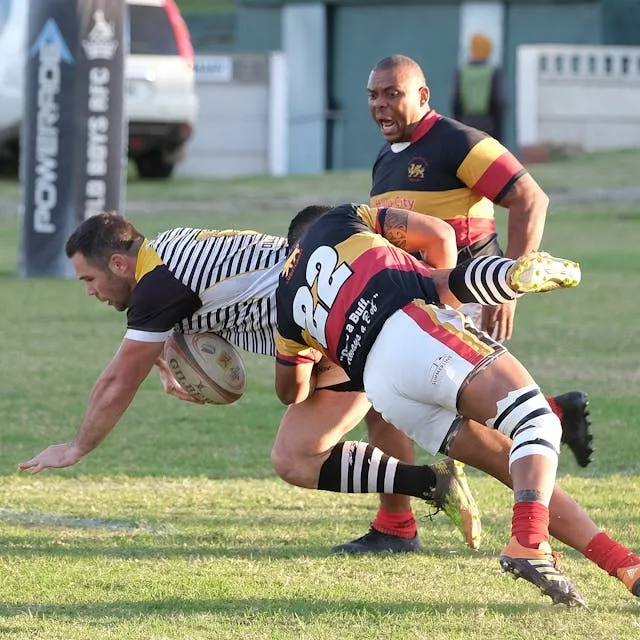
Rugby is a ritual in South Africa. The Springboks wear their jerseys like armor and walk into every test match as if they’re stepping into a storm they plan to own.
Think back to Ellis Park, 1995. Mandela in that green No. 6 jersey, the crowd shaking the air, and Francois Pienaar lifting the trophy as if he were lifting the country with it. It was a national rebirth. Then, decades later, Siya Kolisi took that same cup and raised it high for a new generation that had its own wounds and its own pride (Kolisi became South Africa’s first Black captain to lift the Rugby World Cup trophy in 2019, a moment viewed by over 44 million South Africans worldwide).
The Boks don’t play for pretty rugby. They play for control. They grind opponents down, inch by inch, until the other side forgets how to breathe. It’s the kind of strength that doesn’t need to announce itself. That relentless, defensive identity defines modern Springbok rugby—ranked World No. 1 as of late 2025, with four Rugby World Cup titles to its name. It stands there like Table Mountain in a storm.
Cricket: Beauty and Heartbreak
Cricket in South Africa is smooth when it’s flowing. It’s a sport built on rhythm and timing, and sometimes, heartbreak.
The Proteas have a complicated relationship with destiny. The 1999 World Cup semifinal still stings: a tie that felt like a tragedy. Yet, when they’re in form, they’re untouchable. Jacques Kallis could bat for days without blinking. AB de Villiers turned fielders into spectators. Dale Steyn’s run-up looked like bottled lightning, the kind that made batters forget their footwork and pray instead.
Cricket here is about elegance under siege. You’re expected to stay calm as chaos brews around you. Maybe that’s why South Africans keep loving it. As of 2025, the Proteas sit inside the ICC’s top five in both ODI and T20 rankings, continuing to balance promise with pain. It’s the art of staying collected in a country that’s never been simple.
Football: The People’s Pulse
If rugby is armor, football is heartbeat. It belongs to the masses, the alleys, the open fields. It’s fast, loud, unpredictable. Not unlike a good night in Johannesburg, really.
When South Africa hosted the 2010 FIFA World Cup, it didn’t just host a tournament (It was the first World Cup ever held on African soil, drawing 3.18 million in-stadium spectators and over 3 billion TV viewers worldwide). It turned the world into its guest. The vuvuzelas and dancing were joy unfiltered. And when Bafana Bafana beat France, the sound that rolled through the country was something bigger than victory. It was pride rediscovered.
At home, football runs deep. Kaizer Chiefs and Orlando Pirates are a few teams that have more tribal allegiances. The crowds sway, sing, argue, and believe. South Africa’s Premier Soccer League (PSL) ranks among Africa’s richest, with combined club revenues exceeding R1.6 billion ($85 million) annually. The game isn’t scripted, and that’s what makes it real. It’s the country in miniature: vibrant, chaotic, impossible to ignore.
Golf, Swimming, and the Quiet Killers
Beyond the roars and chants, South Africa has bred champions who work in silence. Golfers who stalk greens like hunters. Swimmers who cut through water like knives.
Gary Player—“The Black Knight”—traveled the world and beat it at its own game (He remains one of only five golfers ever to win the career Grand Slam). Ernie Els moved like a man who’d already seen the future. Retief Goosen won majors by staying as calm as a sunrise. These men didn’t just play golf; they perfected its patience.
In the water, Penny Heyns rewrote what was possible in the 1990s, sweeping Olympic gold in both breaststroke events. Years later, Chad le Clos beat Michael Phelps, the unthinkable upset (It happened in the 200 m butterfly at the 2012 London Olympics, one of South Africa’s 27 total Olympic gold medals to date), the kind that makes time slow down. They were the product of stubborn will and relentless work.
The Grit That Builds Champions
Here’s the truth: South Africa doesn’t produce athletes in gleaming facilities with high-tech diets. It produces them in dust, heat, and grit.
Champions are shaped by scarcity. By the makeshift pitch. By the coach who drives an hour each way for practice. By the hunger that says “not today” every time life tries to tackle you. That’s why the country’s greats look different when they win. You can see the cost in their eyes.
The drive runs deep. The Springboks don’t crumble under pressure because they grew up with it. The Proteas don’t quit because they’ve seen worse. Footballers keep running because the dream’s always been a moving target. In South Africa, sport is survival dressed up as glory.
That’s why, for bettors and fans alike, South African sport remains unpredictable yet irresistible—a blend of raw willpower and magic that keeps rewriting what’s possible.